
Listen

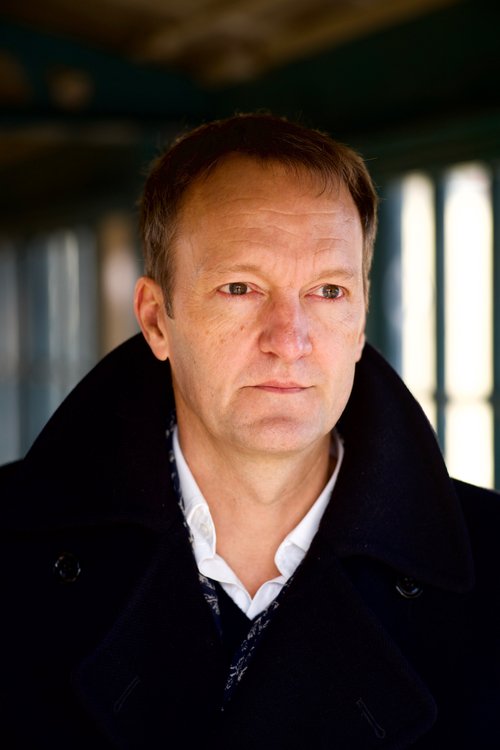
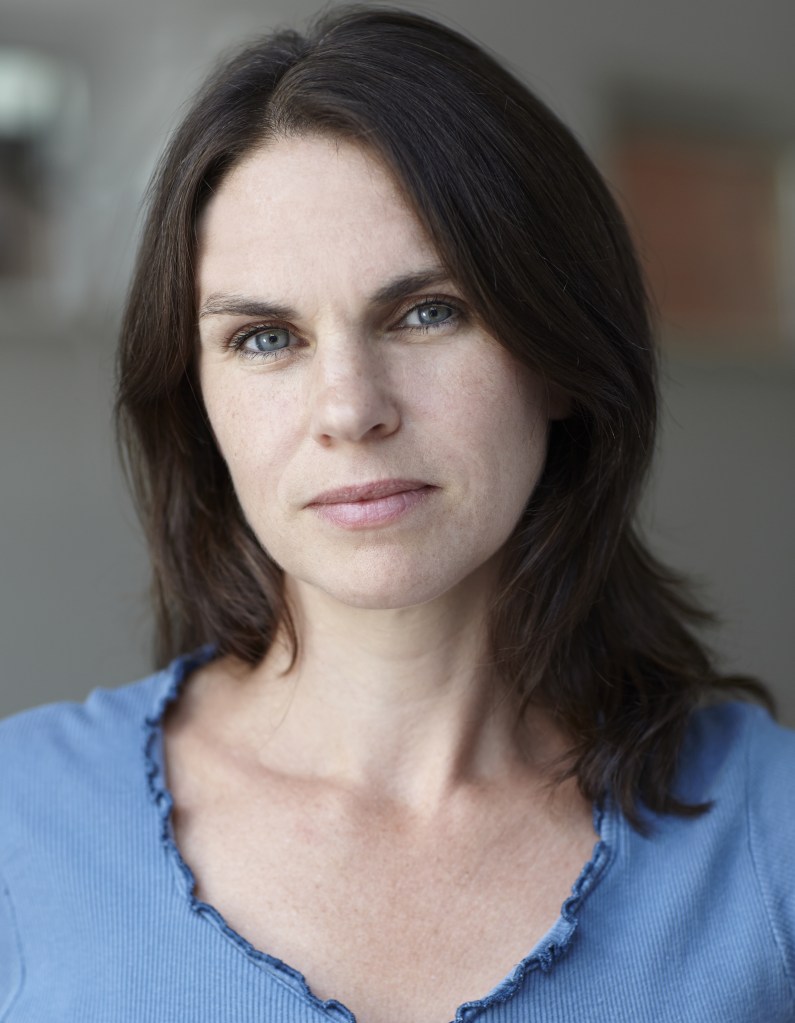
Keetie Roelen

Photo of Keetie Roelen by Brian Tomlinson

Keetie Roelen discusses with Ivan six things which should be better known.

Keetie Roelen is a leading thinker in poverty and social policy and a longstanding advocate for social justice. She currently works as a Senior Research Fellow and Co-Deputy Director at the Centre for the Study of Global Development at The Open University, the largest university in the UK. She is also founder and host of the podcast Poverty Unpacked, exploring the hidden sides of poverty in conversation with a broad range of experts.

Keetie has a PhD in Public Policy and has been working in the field of poverty, social policy, and international development for more than 15 years. Keetie has widely published in academic journals and books, and her work has featured in media such as the Guardian and BBC World Service. She has spoken about how to address poverty to multiple audiences, ranging from government ministers at the UN and MPs in UK parliament to students and activists.

Keetie is passionate about contributing to a fairer world and creating more prosperous lives for all. Across her career, she has listened to personal accounts of hundreds of families and interviewed dozens of experts, building a deep appreciation of the complexities and opportunities for addressing adversity. Her new book is The Empathy Fix which seeks to tell a new story about why hardship persists and how we can break the cycle.

1. European films https://www.theguardian.com/film/2019/feb/10/european-film-must-see-25-movies

2. Transplant Games https://www.bbc.co.uk/news/newsbeat-66336861

3. Early paintings by Van Gogh https://entertainment.howstuffworks.com/arts/artwork/early-paintings-by-vincent-van-gogh.htm

4. Assistance dogs https://www.equalityhumanrights.com/guidance/assistance-dogs-guide-businesses-and-service-providers

5. ATD Fourth World https://www.atd-fourthworld.org/who-we-are/

6. Dominicanen bookshop in Maastricht https://www.awellreadwanderer.com/boekhandel-dominicanen-unique-bookstore/

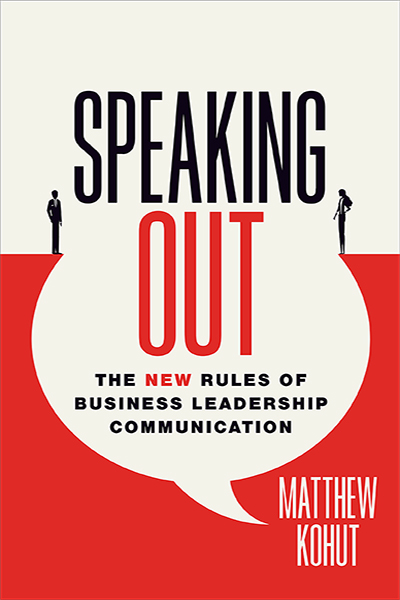
Matt Kohut

Matt Kohut discusses with Ivan six things which should be better known.

Matthew Kohut is the author of Speaking Out: The New Rules of Business Leadership Communication (2024). He is the coauthor of The Smart Mission: NASA’s Lessons for Managing Knowledge, People, and Projects (2022), and Compelling People: The Hidden Qualities That Make Us Influential (2013), one of Amazon’s Best Business Books of 2013. As the managing partner of KNP Communications, Matt has prepared CEOs, elected officials, and public figures for events from live television appearances to TED talks. Matt has taught at George Washington University and held a fellowship at Bennington College. His writing has appeared in publications from Harvard Business Review to Newsweek.

1. The best way to get someone to agree with you is to start by agreeing with them. Reciprocity makes the world go round. When trying to persuade someone, ask yourself first about the other person’s concerns, interests, or emotions: is there something you can authentically validate? Start there rather than with your point of view.

2. Machiavelli’s dilemma–is it better to be loved than feared or feared than loved?––is a false choice. Few people remember this sentence that followed the question: “One should wish to be both, but…it is difficult to unite them in one person.” It’s not either/or. Strength and warmth are complements, not opposites. People want to know that you are strong and warm—that you are both capable and caring. 

3. Knowledge is profoundly social. What you know is deeply influenced by your context and culture. It comes from a combination of experiences and reflective learning, and it’s often difficult to articulate. We learn by doing and talking to others about it. Ask a figure skater how to land a triple axel or a heart surgeon how to replace a bad valve; neither will be able to share what they know unless you’re a peer with a shared sense of context.  

4. If you want people to remember what you say, tell a story. As prophets and philosophers have known for millennia, stories stick with us. Psychologist Jerome Bruner found that a story is 22 times more memorable than the same information delivered as flat content. Stories also provide a context in which people can find a shared sense of meaning and purpose.

5. Purpose leads to motivation; struggle leads to meaning. A shared purpose gives a group something to strive toward. A shared sense of meaning only comes when experience is followed by reflection and discussion. The shared meaning that a group assigns to an experience is a measure of its significance. 

6. Listening to understand another person’s perspective takes different skills than listening to analyse a problem and make a decision. None of us really know what it’s like to walk in another person’s shoes. This kind of listening calls for embracing the realization that you don’t know what you don’t know. Tone is critical. Think twice before you say, “I understand,” because you might not understand. 

Adam Higginbotham

Adam Higginbotham discusses with Ivan six things which should be better known.

Adam Higginbotham is the author of Midnight in Chernobyl, winner of the Andrew Carnegie Medal for Excellence in Nonfiction and one of the New York Times’ Ten Best Books of 2019.

His latest book, Challenger: A True Story of Heroism and Disaster on the Edge of Space, was published by Avid Reader Press in May this year. An immediate New York Times bestseller, Challenger is the winner of the 2024 Kirkus Prize for Nonfiction.

1. William Friedkin’s Sorcerer https://rogersmovienation.com/2024/04/07/classic-film-review-reconsidering-sorcerer-1977/

2. Roger Boisjoly https://www.npr.org/sections/thetwo-way/2012/02/06/146490064/remembering-roger-boisjoly-he-tried-to-stop-shuttle-challenger-launch

3. The Allen Room at the New York Public Library https://www.nypl.org/about/locations/schwarzman/research-study-rooms

4. Len Deighton https://www.deightondossier.net/

5. Strong Words magazine https://www.strong-words.co.uk/

6. Peter Nichols’ A Voyage For Madmen https://thetidesofhistory.com/2022/10/09/book-review-a-voyage-for-madmen-by-peter-nichols/

Al Murray

Al Murray [photo by Pete Dadds]

To mark the 350th episode, comedian Al Murray discusses with Ivan six things which should be better known.

Al Murray‘s alter ego, The Pub Landlord, is one of the most recognizable and successful comic creations of the past twenty years, and Murray, who has won numerous awards and accolades, continues to fill arenas and theatres around the world.

He is also the author of many successful books including Watching War Films with My Dad and Command, a sharply entertaining analysis of the key allied military leaders in the Second World War. He is well known for co-hosting the hugely popular Second World War history podcast, We Have Ways of Making You Talk with fellow bestselling military author James Holland.

Arnhem: Black Tuesday is his first history book about a single campaign.

To view his tour dates visit: http://www.thepublandlord.com

“It remains one of the great joys in comedy to see the Pub Landlord befriend and belittle the front rows, blithely dishing out attributes to them, responding with superfast wit… So long as he has an audience with a pulse and an onstage pump that dispenses frothy lager for him to spill on them, Murray will always be a good night out.” – Dominic Maxwell, The Times

1. Bernard Law Montgomery https://www.lrb.co.uk/the-paper/v03/n12/john-keegan/the-mothering-of-montgomery

2. Zeno’s The Cauldron https://www.penguin.co.uk/books/468655/the-cauldron-by-zeno/9781804996621

3. Blood stem cell donation via DKMS https://www.dkms.org/get-involved/become-a-donor

4. Bill Bruford https://www.loudersound.com/features/ive-been-booted-out-of-king-crimson-about-three-times-bill-bruford-on-a-life-in-music

5. Scale modelling https://uk.airfix.com/community/blog-and-news/tips-and-tricks/new-case-study-explains-positive-benefits-scale-modelling

6. The culture of remembrance in Arnhem https://www.airbornearnhemwest.nl/en/welkom-bij-de-website-van-de-airborne-herdenking-in-arnhem-west-english/

Jon Moynihan

Jon Moynihan discusses with Ivan six things which should be better known.

Jon Moynihan is a businessman and venture capitalist who started his career advising companies and banks in the Netherlands, the US and the UK as a specialist in mergers and turnarounds. He then ran the global firm PA Consulting Group for 21 years.  He subsequently transitioned into venture startups, creating over 20 companies to date, most of them in the science and technology fields. Jon has worked as a volunteer in the charity sector all his life, including in Bangladeshi refugee camps and other developing countries, in educational think tanks, both managing and fundraising for charities, more recently in the arts sector where, among other activities, he was president of the Royal Albert Hall for a number of years. Jon sits in the House of Lords as Baron Moynihan of Chelsea. His new book is Return to Growth: How to Fix the Economy

1. Most of the economies of the world continue to grow: but not the Social Democracies, especially in Europe.

2. It’s incontrovertible that too-large government results in flattened growth.

3. People in the UK are on average earning some 5 per cent less than they were 17 years ago.

4. If you spend more than the OECD average on Education, as the UK does, the extra spend doesn’t improve educational outcomes.

5. The UK, compared with just about every other developed economy was far more incontinent on its spending during Covid.

6. The impact of China’s one-child policy is that by the year 2100, the threat of China will have receded. It will be dominated by its elderly, and its population will be half that of India’s.

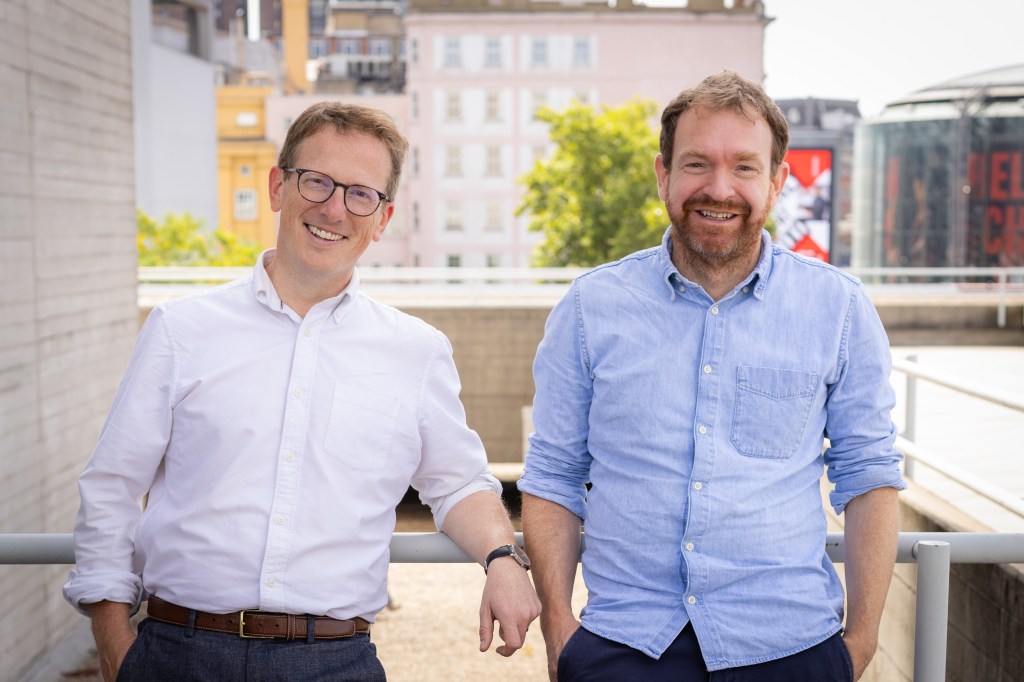
Delayed Gratification

Delayed Gratification co-founders Rob Orchard and Marcus Webb discuss with Ivan six things which should be better known.

Rob Orchard and Marcus Webb are co-founders of Delayed Gratification, the world’s first Slow Journalism magazine, launched in 2011. Delayed Gratification revisits events after the dust has settled and makes a virtue of being “Last to Breaking News.” 

Rob and Marcus have been named Independent Editors of the Year three times by the British Society of Magazine Editors. Prior to launching the magazine, both Rob and Marcus worked for Time Out and have written for EsquireTime and the Guardian

Delayed Gratification has been profiled by media organisations including the New Yorker, the Telegraph, the EconomistEl Mundo and Die Zeit. The pair have spoken about Slow Journalism on ABC, PBS, the BBC and Sky News as well as in an influential Tedx talk.


Along with Delayed Gratification’s art director Christian, Rob and Marcus are co-authors of An Answer For Everythingthe critically acclaimed book of infographics published by Bloomsbury. Their new book Misc., a compendium of delightfully random facts discovered in 13 years of research for the magazine, was published by Bloomsbury in October 2024.

1. Drowning people pulled from the Thames used to be treated with tobacco enemas https://bcmj.org/special-feature/special-feature-tobacco-smoke-enemas

2. Andre Agassi used Boris Becker’s tongue to win tennis matches https://www.businessinsider.com/andre-agassi-beat-boris-becker-watching-tongue-serves-2021-4

3. Life on Mars sounds horrible https://pmc.ncbi.nlm.nih.gov/articles/PMC2845199/


4. Movie star Hedy Lamarr is the unsung heroine of Bluetooth https://www.forbes.com/sites/shivaunefield/2018/02/28/hedy-lamarr-the-incredible-mind-behind-secure-wi-fi-gps-bluetooth/


5. One hardy entomologist set himself the task of being bitten by as many insects as possible, and recorded the experiences in lyrical prose https://www.chemistryworld.com/careers/the-man-who-gets-stung-by-insects/2500173.article


6. Many of the very worst films ever released have made more than half a billion dollars at the box office https://en.wikipedia.org/wiki/List_of_highest-grossing_films

Andrew Hindmoor

Andrew Hindmoor discusses with Ivan six things which should be better known.

Andrew Hindmoor grew up in Sheffield, left, went to Australia, and boomeranged back to Sheffield in 2013. He is a Professor of Politics and Co-Director of the Sheffield Political Economy Research Institute. He recently published Haywire: A Political History of Britain Since 2000 with Penguin which was the Times’ ‘book of the week’ when it was released. He has previously published 12 Days Which Made Modern Britain with Oxford and academic books on the financial crisis and the state. He makes a mean lemon meringue pie.

1. North Stradbroke Island, Queensland. https://stradbrokeisland.com/

2. The Americans boxset https://www.amazon.co.uk/Americans-Complete-Seasons-1-6-DVD/dp/B07FYBZMN5

3. Hitchhiking https://medium.com/@korkmazlarr/the-exhilarating-journey-unveiling-the-benefits-of-hitchhiking-27f996c6d2ca

4. The Office for National Statistics data on happiness and life satisfaction (https://www.ons.gov.uk/peoplepopulationandcommunity/wellbeing/bulletins/measuringnationalwellbeing/april2022tomarch2023 for the most recent release)

5. Philip Short’s biography of Vladimir Putin https://www.penguin.co.uk/books/430057/putin-by-short-philip/9781784700935

6. The alternative walk from Wasdale. Don’t go East from Wasdale up Scafell Pike. Go West and walk the horseshoe across Red Pike, Pillar and Great Gable.

Josie Lloyd

Josie Lloyd discusses with Ivan six things which should be better known.

Josie Lloyd, also writing as Joanna Rees, is the Sunday Times No.1 bestselling international author of over twenty novels and has been translated into 27 languages. Come Together, which she co-authored with her husband Emlyn Rees, was number one for 10 weeks and made into a Working Title film. Josie Lloyd recently wrote contemporary women’s fiction novels The Cancer Ladies Running Club and Lifesaving for Beginners, which was a #1 Bookseller Heatseeker. Miss Beeton’s Murder Agency is her first crime novel.

1. Isabella Beeton – she of the ‘Book of Household Management’ fame is still relevant today.  Her weighty Victorian tome was full of common sense advice on how to run a household, but lots of it still rings true: like cooking a big meal on a Sunday and using the left-overs all week. Making sure that you find the best quality ingredients at the lowest price and learning how to budget properly. And, just when we thought it was a new idea, one of her pieces of advice is for the mistress of the house to rise early and take a cold bath.  She was the perfect inspiration for my latest novel, Miss Beeton’s Murder Agency.

2. Creative collaboration is a magical thing. When I first met Emlyn, my husband, he was my agent’s assistant and we came up with a crazy idea to write a book together. He went away and wrote a chapter from a boy’s point of view, then I wrote a response from the female point of view. The book went on to be Come Together, a number one hit which was translated into 26 languages. Over the following seven novels, we learnt how to write collaboratively and still have a thriving writing partnership and have just written another rom com together. Learning how to plan and give feedback is key, but it’s so exciting to be involved in a creative project together.  It’s true that two heads are better than one.

3.  There’s no perfect way to be ‘a writer’.  And certainly staring at a blank screen is not necessarily a good way to start. I’ve learnt that it’s crucial to accept and embrace your own method. Like most writers, I’ve always had a slight imposter syndrome, not really thinking I’m a ‘proper’ writer – even after 22 published novels. When lock-down happened, I thought it would be a fabulous time to write, but it was tumble-weed. I realised that I need interaction with people and that I write on the hoof, in brief snatches. I also always write ‘You are free to write the worst junk in the world’ at the top of every document – which tends to shut up my inner critic.

4. It’s breast cancer awareness month and having been through it – and having been inspired to write The Cancer Ladies’ Running Club – it’s important that people know that there are two types of breast cancer – lobular and ductal. Lobular accounts for 15 per cent of all breast cancers, which doesn’t sound much means that 22 women a day are diagnosed with it – often many of them too late.  I am now patron of Lobular Breast Cancer UK and do a lot of work to support women through breast cancer diagnosis and treatment. A large part of that is educating people that women are not just looking for a lump, but any change in breast tissue.

5. Having breast reconstruction surgery is not the only option after breast cancer. I had a prosthetic breast made that matches my bumpy chest wall and it’s a game-changer. More people need to know that this is a great alternative to surgery.

6. Daily Qi Gong is amazing. As a busy mum of three with a successful career, cancer came as an enormous shock. I realised that I’d put my own well-being at the very bottom of my list. After I’d been through treatment, I discovered Qi Gong the ancient art of moving meditation. I religiously do a fifteen minute routine upon waking – in my dressing gown, outside, and it has profoundly changed my life and wellbeing. Putting a ‘me-time’ routine into your day, but keeping it consistent is the key to well-being.

Alice Hunt

Historian Alice Hunt discusses with Ivan six things which should be better known.

Alice Hunt is Professor of Early Modern Literature and History at the University of Southampton. She is the author of The Drama of Coronation (Cambridge University Press) and has previously written about the Tudors and James I, and often appears in the media to discuss monarchy. Her new book is Republic: Britain’s Revolutionary Decade 1649-60. She lives in Winchester.

  1. The Republic. The fact that we once were a republic, that it was called and known as a republic, and what this republic was actually like should all be better known.
  2. Richard Cromwell. Eldest surviving son of Oliver Cromwell who succeeded his father as Lord Protector. That he once held the top job should be better known, but also what he was really like, and why he didn’t survive, should be better known. He has been misrepresented cruelly by history as ‘Tumbledown Dick’.
  3. Samuel Hartlib. Polish entrepreneur who moved to England and flourished in the creative, reforming energy of the 1650s. An inveterate communicator and intelligencer, he knew everyone who was anyone at the time and had a finger in every pie. He feverishly promoted ideas to the new republican government that were way ahead of their time: paper money, a national bank, a health service, state schools, the return of the Jews.
  4. The Compleat Angler by Izaak Walton. This beautiful, sweet, quiet book about fishing was a huge bestseller in the 1650s. It went into multiple editions, has never been out of print, and is still in print today. Why was this book so famous? And what does it tell us about the time?
  5. Forde Abbey, Dorset. I absolutely loved discovering Forde Abbey during the research for this book. This former Cistercian monastery, nestled in the valley of the River Axe, completely transformed my thinking about who the puritan, republican men were who governed England at this time, and what drove and motivated them. Edmund Prideaux – Cromwell’s attorney general and MP for Lyme Regis –bought and restored Forde Abbey in 1649. The house is now privately owned but is open to the public.
  6. The Experimental Philosophy Club. This is the name of the society of young, curious, committed scientists who met in Oxford during the 1650s to share ideas and plan experiments. Its members included Robert Boyle, Robert Hooke, Christopher Wren. They later became known as the Royal Society – and their associations with the republican years papered over and forgotten.  

Nabeel Qureshi

Nabeel Qureshi discusses with Ivan six things which should be better known.

Nabeel S. Qureshi is an entrepreneur and researcher specializing in artificial intelligence and healthcare. He is the CEO of a new startup company and a Visiting Scholar at the Mercatus Center at George Mason University. Nabeel is based in New York and grew up in Manchester, England.

1. The filmmaker Apichatpong Weerasethakul https://www.newyorker.com/magazine/2022/01/17/the-metaphysical-world-of-apichatpong-weerasethakuls-movies

2. Empson’s Seven Types of Ambiguity https://www.nybooks.com/articles/1975/01/23/incomparable-empson/

3. Wittgenstein’s late notebooks, Culture and Value https://prismatically.blog/2020/08/30/wittgenstein-culture-and-value-whereof-one-cannot-speak-thereof-one-must-be-silent/  

4. The pianist Grigory Sokolov, especially his recording of Bach’s Goldberg Variations https://open.spotify.com/track/0iD6SmRyOj23fCKyG4x8zj?si=decbea5bd38f4515&nd=1&dlsi=ce22c9bdf87a4ba4

5. The essay Art as Technique by Viktor Shklovsky https://warwick.ac.uk/fac/arts/english/currentstudents/undergraduate/modules/fulllist/first/en122/lecturelist-2015-16-2/shklovsky.pdf

6. A Suitable Boy by Vikram Seth https://www.lrb.co.uk/the-paper/v15/n08/john-lanchester/indian-summa