Listen

Simon Tolkien

Simon Tolkien discusses with Ivan six things which should be better known.

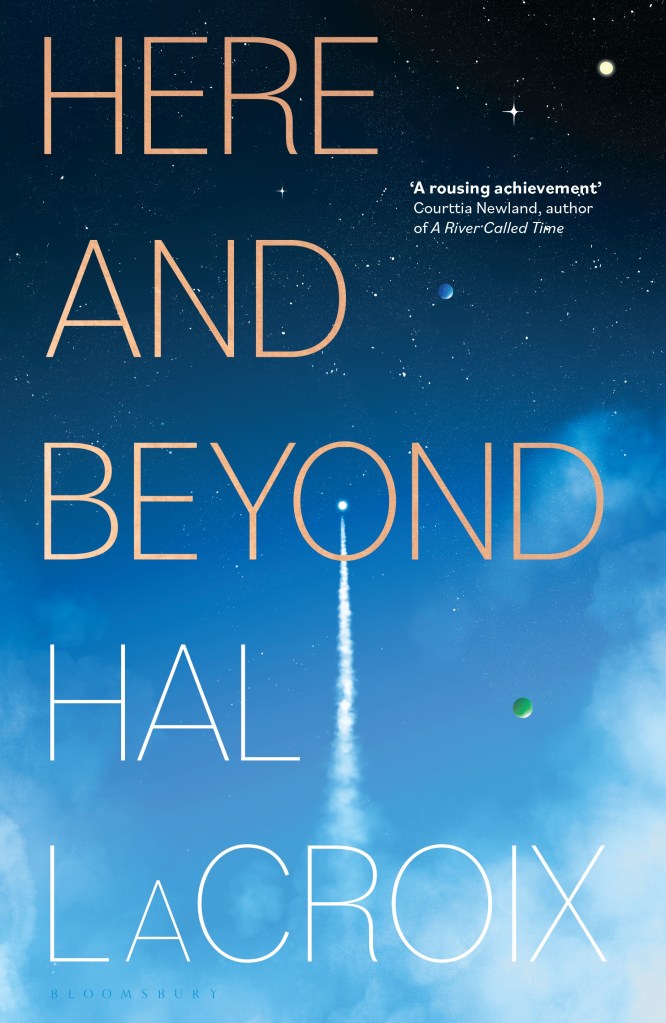
Simon Tolkien is the grandson of JRR Tolkien and a director of the Tolkien Estate. He is also series consultant for the Amazon series, The Rings of Power. Simon studied Modern History at Trinity College, Oxford and went on to become a barrister specializing in criminal defence. He left the law to become a writer in 2001 and has published five novels which mine the history of the first half of the last century to explore dark subjects – capital punishment, the Holocaust, the Blitz and the Battle of the Somme. The epic coming-of-age story of Theo Sterling, set in 1930s New York, England and Spain, is being published in two volumes, The Palace at the End of the Sea in June, and The Room of Lost Steps, on 16th September this year.

1. The International Brigades https://www.nybooks.com/articles/2022/02/24/soldiers-of-solidarity-spanish-civil-war/

2. Gustave Caillebotte https://www.bbc.co.uk/culture/article/20150706-caillebotte-the-painter-who-captured-paris-in-flux

3. Port Meadow, Oxford https://www.oxford.gov.uk/directory-record/673/port-meadow

4. The Conversation https://www.theguardian.com/film/article/2024/jul/04/the-conversation-review-gene-hackman-is-unforgettable-in-coppolas-paranoid-classic

5. Gerard Manley Hopkins https://www.lrb.co.uk/the-paper/v36/n07/helen-vendler/i-have-not-lived-up-to-it

6. Santa Barbara, California https://www.lonelyplanet.com/articles/guide-to-santa-barbara

Daria Lavelle

Daria Lavelle discusses with Ivan six things which should be better known.

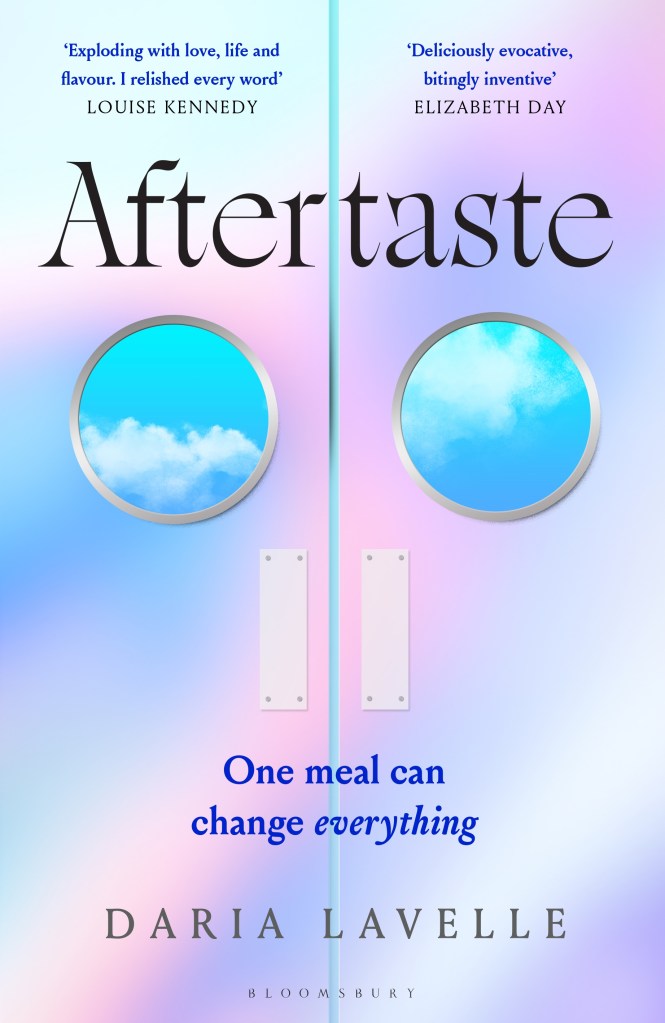
Daria Lavelle was born in Kyiv, immigrated to the US with her family as a child and now lives in New Jersey with her husband and their three children. She holds a BA from Princeton University and an MFA from Sarah Lawrence College. She writes fiction, with short stories published in a variety of US outlets. Aftertaste is her debut novel.  It’s already sold into 13 territories with a major motion picture in development.

1. Putting Salt on Fruit – the easiest way to elevate and bring out the deepest flavors of your food (even out of season)! But one that most people don’t think of combining with their fruit dishes. 

2. Opera for Fantasy Lovers – Opera is woefully unfashionable among younger people, and most high-fantasy and speculative fiction lovers I know have no interest in this stuffy art form, and yet, some of the most formative and epic and compelling narratives ever presented are operatic in form. 

3. The Hoboken, NJ food scene – New York (and Brooklyn, and Queens) get most of the love and accolades for their restaurant offerings, but Hoboken, NJ, right across the water, is like the best kept secret of Italian-American cuisine and fabulous cocktails. (Maybe I should keep this one a secret, as the lines for Fiore’s are already too long.)

4. The film What Dreams May Come – this 1998 film is largely forgotten / unknown among anyone under the age of 30, but it’s worth revisiting as one of the most interesting and beautiful explorations of death, grief, love, and the Afterlife. It started my obsession with what happens after we pass, and absolutely led me to Aftertaste. 

5. Family Recipes – this is perhaps an imperative to listeners to take the time to learn their family recipes from their older generations, and to document them in new formats (transcribe your recipe cards to digital!). So many people I know remember dishes from their childhoods, made by a grandparent, but have no way of recreating those flavors for themselves now. 


6. Finding Your Tribe 
– I’d love to talk about several ways this has been true in my life, from writing cohorts to mom groups with my kids, to the debut groups I’m part of this year as I move toward publication. It can’t be overstated what a difference it makes to have a group of people who understand your experience, no matter where you are in life, and who can share their tips and gotchas and learnings with you. And some cohorts are talked about, like mom tribes, or professional associations, but others aren’t really, like writer’s groups or debut cohorts, because they’re so self-selective. It’s about people seeking one another out. 

Michelle Young

Michelle Young discusses with Ivan six things which should be better known.

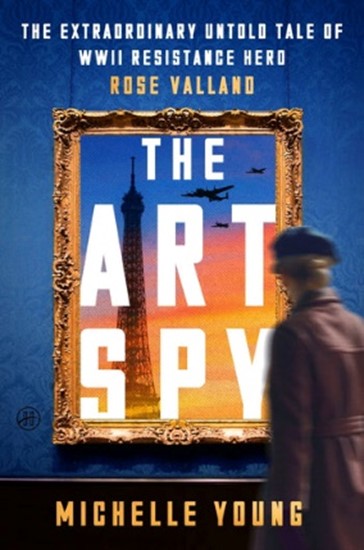
Michelle Young, a journalist and professor of architecture at Columbia University, spent four years researching The Art Spy: The Extraordinary Untold Tale of WWII Resistance Hero Rose Valland. A veritable female Monuments Man, Valland has, until now, mostly been written out of the annals, despite bearing witness to history’s largest art theft. While Hitler was amassing stolen art for his future Führermuseum, Valland secretly worked to stop him.

Michelle Young is an award-winning journalist, author, and professor whose writing on looted and lost art has appeared in Hyperallergic, The Forward, and The Wilson Quarterly. She is a graduate of Harvard College in the History of Art and Architecture and holds a master’s degree from Columbia University’s Graduate School of Architecture, Planning and Preservation, where she is a professor of architecture. She is also a scholar in the New York Public Library’s Allen Room and the founder of the publication Untapped New York. Michelle appears regularly in documentaries by Netflix, National Geographic, The History Channel, Smithsonian, PBS and more, and her work has been published additionally in Narratively, The Guardian, the Wall Street Journal, Business Insider, Curbed, and Metropolis Magazine. She divides her time between New York City and Paris.

1. Rose Valland was one of the most medalled women from all of WWII

2. Hollywood optioned Rose’s memoir and it became the Burt Lancaster caper The Train

3. Rose witnessed the Nazis burn approx 500 modern paintings of art and it really happened

4. Rose was lesbian and started living with Joyce Heer, her life partner, starting in the mid 1930s. 

5. Rose was spying in the field, as well as in the museum. She also worked directly with Resistance operatives, which is how she directly helped sabotage the last train of art intended to leave France, carrying 1000 paintings. 

6. One of the very first things the Nazis did when they occupied a country was to loot its art, in particular from Jewish families. There is a direct line between art looting and the extermination camps

Róisín Lanigan

Róisín Lanigan discusses with Ivan six things which should be better known.

Róisín Lanigan is an editor and writer based in London and Belfast. Her work has appeared in i-D, VICE, The Atlantic, New Statesman, The Fence and Prospect, amongst other publications. She was longlisted for the Curtis Brown First Novel Prize in 2019, and won the Blue Pencil Agency First Novel Award in 2020. I Want to Go Home But I’m Already There is her first novel.

1. Dulse https://pacificharvest.co/blogs/learn/7-mindblowing-health-benefits-of-atlantic-dulse?srsltid=AfmBOoq6KFW9CJ2ZhY0K-LZcyK3zhku4Xe2I0CniSHs1noqs-VRI7Mq-

2. Pigeons https://www.reddit.com/r/unpopularopinion/comments/lx86p7/pigeons_are_underrated_animals/?rdt=55432

3. The Montreal Screwjob https://prowrestling.fandom.com/wiki/Montreal_Screwjob

4. Paris Is Burning https://www.rogerebert.com/reviews/paris-is-burning-1991

5. Parkland Walk https://www.parkland-walk.org.uk/

6. The Ballymurphy Massacre https://www.theguardian.com/uk-news/2021/may/11/the-ballymurphy-shootings-36-hours-in-belfast-that-left-10-dead

Laura Spinney

Laura Spinney discusses with Ivan six things which should be better known.

Laura Spinney is a writer and science journalist. Her writing on science has appeared in The Guardian, The Economist, Nature and National Geographic, among others. She is the author of two novels, The Doctor (2001) and The Quick (2007), and a collection of oral history, Rue Centrale (2013). Her bestselling non-fiction account of the 1918 flu pandemic, Pale Rider: The Spanish Flu of 1918 and How it Changed the World (2017), was translated into more than 20 languages. Her latest book, Proto: How Once Ancient Language Went Global, the story of the Indo-European languages, appeared in 2025. She lives in Paris.

  1. Osmothèque – international perfume archive in Versailles. Conserves 4,000 perfumes, of which 800 have “disappeared”
  2. Studs Terkel. Legendary American broadcaster, writer, actor and historian
  3. Circus elephants, or rather their owner-handlers. A dying breed, as they should be, but they deserve our compassion and respect
  4. Papuan languages. Nearly 900 of them, vast majority of which are undocumented
  5. Gloria! 2024 Italian-Swiss film, directorial debut of Margherita Vicario
  6. Marija Gimbutas. Lithuanian-born archaeologist who got it right on the word’s largest language family, Indo-European

Sara Leila Sherman and Mort Sherman

Sara Leila Sherman and Mort Sherman discuss six things which should be better known.

Sara Leila Sherman is a distinguished classical musician and educator, renowned for her work in making music accessible to young audiences through her children’s concert series, Mozart for Munchkins, and the non-profit Little Mozart Foundation. Blending music and mindfulness, she has pioneered innovative approaches that empower educators and parents to use music as a tool for mindful learning and personal growth at esteemed institutions such as Lincoln Center Kids, The New York Public Library, and Hudson Yards to ensure music is available to all communities.

Morton Sherman, PhD is the retired Senior Associate Executive Director of The School Superintendents Association, known for his visionary leadership during a 25-year career as a superintendent dedicated to elevating academic standards and promoting equitable education. Throughout his career, Mort championed initiatives that addressed achievement gaps and empowered communities, leaving a legacy of systemic change and a commitment to fostering inclusive, impactful learning environments.

Their new book is Resonant Minds.

1. Audiences used to participate in classical music performances.

During Mozart’s time, audiences didn’t sit silently—they clapped between movements, shouted requests, and sometimes even sang along. This challenges our modern perception of “serious” music as something passive. It also shows how music was once deeply social and embodied, not just observed. Maybe it’s time to bring a little of that back.

2. Music has always been a deep part of our lives, socially, culturally, and politically.  For example, the song “Amazing Grace” has been used as a tool for healing in nearly every American crisis.

3. Music affects the brain faster than conscious thought. Our nervous system begins responding to music—adjusting heart rate, releasing dopamine, and even triggering memory—before our brains fully process the sound. This is why music can feel like magic: it bypasses our defenses and helps regulate emotion, attention, and stress. But it’s not just a feel-good extra—it’s neuroscience in action.

4. The best leaders intentionally listen like musicians. Great conductors don’t just give cues—they respond to the ensemble. In the same way, great leaders listen deeply, make space for others’ contributions, and understand that timing, harmony, and silence are as important as action. Music is more than metaphor here—it’s a model. Leaders are successful when they resonate with their communities.

5. Groove isn’t just a feeling—it’s your brainwaves syncing with sound. When we listen to music with a steady beat—especially music with a strong groove—our brainwaves begin to entrain to the rhythm. That’s not poetic language—it’s neuroscience.


6. Music builds memory—and memory builds culture. When students or communities sing the same song across generations, they’re not just repeating notes. They’re participating in a kind of living history. Music helps embed shared values, stories, and emotional touchstones that form the backbone of a resonant, ethical culture.

Jo Harkin

Jo Harkin discusses with Ivan six things which should be better known.

Jo Harkin studied literature at university. She daydreamed her way through various jobs in her twenties before becoming a full-time writer. Her debut novel Tell Me an Ending was a New York Times book of the year. Her new novel is The Pretender. She lives in Berkshire, England.

1. The ruin of Minster Lovell. This was the estate of the Viscount Lovell, one of the main characters in The Pretender. It’s got enough standing walls and a beautiful vaulted entryway to allow you to imagine life there, but also the setting is stunning. It’s in the Cotswolds countryside next to a river – which begins a picturesque walk – an old church, a tiny village, and a traditional dovecot. Legend has it that after Lovell disappeared following the battle of Stoke, he hid in a secret room of this house for years, and in the 1700s his skeleton was found in that chamber. Sadly this fun story isn’t likely to have any truth to it, as Lovell had been a political exile for years before the battle and his house had already been given to allies of Henry VII.

2. Alice Chaucer’s tomb, and the concept of the Memento Mori. An hour away from Minster Lovell, in Oxfordshire, are the former lands of the Earl of Lincoln, another main character in the novel. In the pretty village of Ewelme, St Mary’s church contains the tomb of Alice Chaucer – grand-daughter of the poet himself, and the grandmother of Lincoln. At first glance the tomb looks like a traditional effigy: a clothed woman, lying on her back, hands in prayer position, eyes closed. But below this, if you peer through the decorative stonework, you can see a very different alabaster effigy, this time depicting a dessicated, gaunt corpse with staring eyes and loose hair. This was meant to show the reality of death, and to function as a memento mori – a reminder of what’s coming to us all.

Medieval people loved reminders of death. They had wall art depicting people dancing with skeletons, jewellery showing living lovers on one face and Death on the other. And I actually like this as a concept. Imagining yourself as a corpse really does focus the mind. It snaps you out of autopilot and makes you more grateful for life and your loved ones. Marcus Aurelius recommended imagining, as you kiss your family good night, that they won’t wake up in the morning. Obviously, don’t go too far with it and sink into a depression. Just allow a touch of that awareness to sharpen your appreciation of life.

3. The Fabliaux. A modern English verse translation of medieval French Fabliaux. These were stories told across all levels of medieval society. And they were absolutely filthy. These make The Miller’s Tale look like Mary Poppins. When I read it I’d already started the novel, including what I thought were some fairly spicy conversations and sex scenes. I realised that a medieval reader would have found it laughably tame. I had to go back and turn up the obscenity dial.

4. The pre-potato pea pottage. A recipe for an overlooked and delicious medieval dish.

5. The British Library Treasures room has a permanent display of original books, maps and manuscripts, including medieval and Tudor era items such as pages from Leonardo da Vinci’s notebooks, Beowulf, and the first printing of the Canterbury Tales.

6. Misericords. Westminster Abbey is on every London tourist’s must see list, but often-overlooked feature are the misericords. In the magnificent Henry VII’s chapel, where his and Elizabeth of York’s tombs are located, the original 16th century hinged oak seats were not visible to the general public and they were accordingly carved with fantastical and humorous images of monsters, devils, pigs playing pipes, mermaids, monkeys, women hitting poorly behaved men, and a fair amount of nudity.

Madeleine Gray

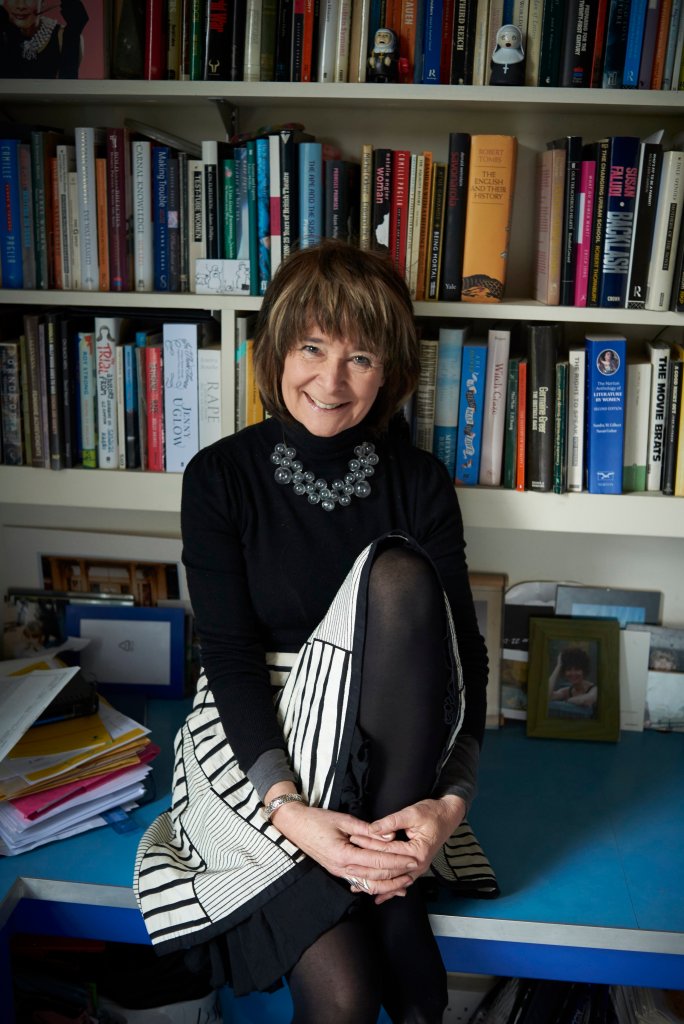
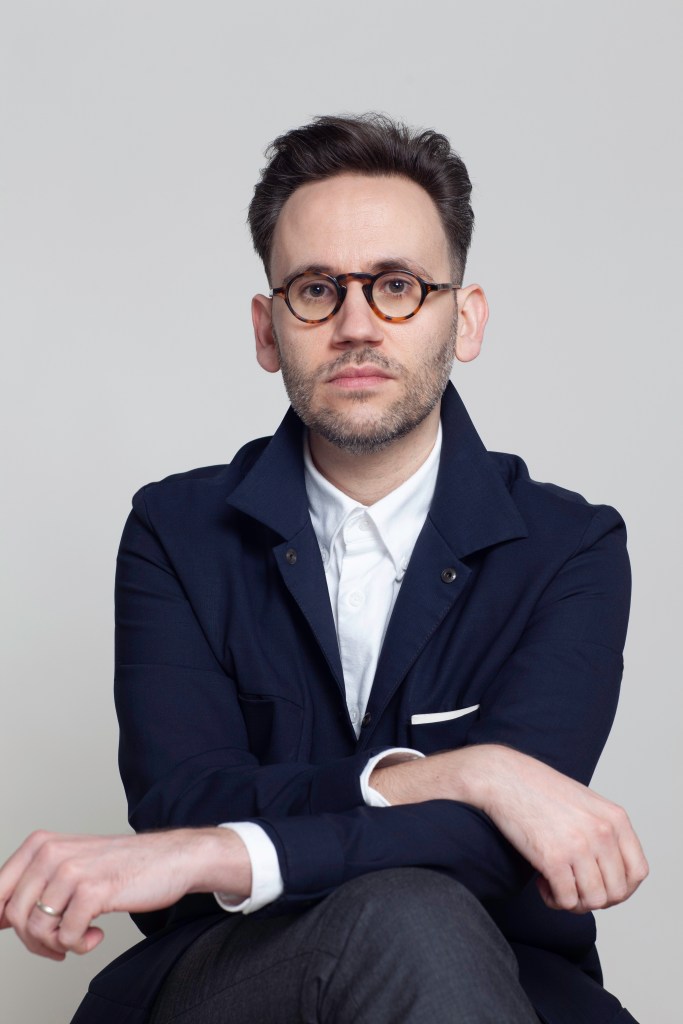
Photo of Madeleine Gray by  Zan Wimberley

Madeleine Gray discusses with Ivan six things which should be better known.

Madeleine Gray is a writer and critic from Sydney. She was a 2021 Finalist for the Walkley Pascall Prize for Arts Criticism, and has written for publications including the Sydney Review of BooksAustralian Book Review and the Times Literary Supplement. She has a MSt in English Literature from the University of Oxford and is a current doctoral candidate at the University of Manchester. Green Dot is her first book.

1. The fact that Aboriginal and Torres Strait Islander peoples are not recognised in the Australian constitution. https://www.theguardian.com/australia-news/2023/oct/14/australia-rejects-proposal-to-recognise-aboriginal-people-in-constitution

2. Who the 78ers are https://www.78ers.org.au/the-ongoing-role-of-the-78ers

3. The television show Deadloch https://en.wikipedia.org/wiki/Deadloch

4. The song ‘Scar’ by Missy Higgins https://www.youtube.com/watch?v=qKn7XAMNV-g

5. Trade union membership in Australia is far too low https://www.abs.gov.au/statistics/labour/earnings-and-working-conditions/trade-union-membership/latest-release

6. Kim Cattrall scatting with an upright bass https://www.youtube.com/watch?v=nBmt2KN5tsY

Alex Conner

Alex Conner discusses with Ivan six things which should be better known.

Alex Conner is an ADHD coach and brain scientist who combines his personal experience with ADHD to be a trusted voice in psychoeducation. He is co-founder and co-host of The ADHD Adults podcast, one of the UK’s most popular ADHD resources. Alongside James Brown, Alex co-founded ADHDadultUK, a registered charity, and Focusmag.uk, an evidence-based online magazine for adults with ADHD. Alex has published research and articles on ADHD and, as an honorary Professor at Aston University, he also delivers ADHD coaching and training to thousands of people. His new book, co-written with James Brown, is ADHD Unpacked.

1. ADHD is not new or over-diagnosed.

2. ADHD is not a superpower for everyone who has it.

3. ADHD is more than inattention and hyperactivity: the emotional side of ADHD.

4. Stigma: adding insult to injury.

5. ADHD doesn’t come alone for most people: co-existing conditions/neurodivergences.

6. Nobody is neurodiverse, and nobody is neurotypical. Why the language of ADHD matters.

Rebecca Lemov

Rebecca Lemov discusses with Ivan six things which should be better known.

Rebecca Lemov is a historian of science at Harvard University and has been a visiting scholar at the Max Planck Institute. Her research explores data, technology, and the history of human and behavioural sciences. She lives in Cambridge, Massachusetts with her family. Her new book is The Instability of Truth.

1. Brainwashing is not about other people https://www.psychologytoday.com/us/blog/freedom-of-mind/202412/so-youve-been-brainwashed-without-realizing-it-what-now

2. The rise and fall and rise of Barbara Pym https://www.newyorker.com/magazine/2022/06/06/when-barbara-pym-couldnt-get-published

3. Kate Smith https://musicologynow.org/kate-smith-and-our-minstrel-past/

4. Nashville film https://www.theguardian.com/film/2021/jun/25/nashville-review-robert-altman

5. The story of the three frogs by Czeslaw Milosz https://bookhaven.stanford.edu/2016/06/happy-birthday-czeslaw-milosz-he-was-no-hero-and-he-knew-it/

6. Brainwashing and trauma are connected, but that was never, or rarely ever, recognized by the experts. https://www.randifine.com/post/brainwashing-the-cunning-psychological-tactic-used-in-narcissistic-abuse-domestic-violence-and-cults