Listen

400th episode

To celebrate the 400th episode of Better Known, previous guest Richard Elwes discusses with Ivan Wise six aspects of the Better Known podcast which Ivan thinks should be better known.

Many thanks to Caroline Crampton and Laurence Bergreen for adding their choices of things which should be better known.

Middle-distance is one of the most exciting forms of running

To mark the 400th episode, listener Peter Cannon chose one thing which he thinks should be better known.

Most people are familiar with opposite ends of the race-distance spectrum: the very short distances of the sprints and the 26.2 miles of the marathon. The sprints will determine who is the fastest on a pure time-trial basis with each runner in his or her own lane. But it’s over in mere seconds. The marathon does not have lanes, obviously, but we’re talking over two hours from start to finish. That is a very long span of time to be engaged in a race that, more often than not, is not close when it really matters. Sometimes sprinters and marathoners come from behind to win. That’s really exciting. And maybe that’s what draws fans to the sport.

There are other race distances between these two extremes. But unless you happen upon one while watching the Olympics, you will be unlikely to encounter it otherwise. It’s middle-distance track. It is simply one of the most exciting forms of racing. And it is here where you will find, almost without fail, what people really enjoy about sports: drama and thrilling finishes.

Middle distance is generally defined to include 800  metres, 1500  metres/1 mile, 3000 metres, and the 3000 metre steeplechase. Although athletics federations classify it as long distance, I view the 5000 metre race as middle distance because it has much more in common with the 1500 than the truly long-distance races.

Unlike all of the sprints (100, 200, 400 metres), there are no lanes separating the middle-distance runners. When the gun goes off, runners all share space on the track. There is physicality – some moderate bumping and shoving – all to obtain and maintain the best position possible. Ideally, it’s near the front of the pack on the inside of lane 1 – so that you run as little extra distance as possible – and always a keen awareness of the runners around you. Some races get strung out while others are relatively slow, which sometimes keeps all of the runners in the race until the very end. The fastest on paper does not always win. Tactics, as much as speed, are key to victory. And there is peril aplenty: get boxed in (meaning surrounded on the inside lane) and you are trapped; you can’t push your way out or you’ll be disqualified. Try to avoid getting boxed in by running in an outer lane and you are already at a disadvantage because you are running extra distance. Responding to moves – one runner surges ahead. Do you go with them or maintain your pace and think they’ll soon run out of fuel? When do you make your move? When do you go? It can’t be too early or too late. Timing is critical.

Some races favour the kickers. These are the runners who can change gears and finish with a relative sprint compared to the other runners. Two very memorable examples of this occurred at this year’s World Championships held in Tokyo. America’s Cole Hocker won gold in the 5000 and New Zealand’s Geordie Beamish won gold in the steeplechase. Both were far from the lead runners and looked to be out of medal contention at the bell (the beginning of the final lap). Yet both unleashed incredible kicks and ran down everyone to win. If you are the fastest on paper this also highlights your dilemma. You have to make sure the pace isn’t too slow, allowing slower runners to remain in the race. You could try to hammer it from the beginning, but very, very few can front run to victory. Even if you are that good, it takes incredible precision. You have to be 100% “on” during that particular race with no margin for error. What is more likely to happen is that you create a slipstream for the other runners to draft in behind you and pass you in the final 100 metres. 

What I also think people would enjoy are the compelling stories in this very individualistic sport. These aren’t faceless, nameless people running. We are watching generational talents right now in athletes like Norway’s Jakob Ingebrigtsen and Kenya’s Faith Kipyegon. There are stories of redemption, too. America’s Shelby Houlihan returned from a four-year doping ban to earn silver in the 3000 at this year’s World Indoor Championship. She then went on to place fourth in the 5000 at the 2025 World Championship, which is the highest an American woman has ever placed in that event in a global final. 

And in any given meet, there will be several of these races at different distances with different runners. Plenty of variety to go around. All of this action unfurls over a very short but meaningful period of time and makes for spectacular entertainment. So that is why I think middle-distance track should be better known. 

Eleanor Doughty

Eleanor Doughty discusses with Ivan six things which should be better known.

Eleanor Doughty began her career in journalism at the Daily Telegraph, before going freelance to focus on writing. She has written the ‘Great Estates’ column in the Telegraph since 2017, and specialises in writing about the British moneyed and titles classes. Her first book Heirs and Graces, a history of the modern British aristocracy was published in September by Hutchinson Heinemann. Her writing appears in Country Life, The Times and Sunday Times, the Telegraph, the Spectator, the Financial Times, The Field and many other publications. When she is not writing, she can be found either on or near a horse, or out with her cocker spaniel.

1. The slow lane of the motorway https://moto-way.com/2019/09/a-beginners-guide-to-motorway-lanes-and-how-to-use-them/

2. The British aristocracy https://uk.bookshop.org/a/447/9781529153040

3. Venison https://www.theguardian.com/lifeandstyle/2013/sep/28/venison-deer-meat-health-heart-benefits

4. The schedule send function on Gmail https://support.google.com/mail/answer/9214606?hl=en-GB&co=GENIE.Platform%3DDesktop

5. Thank you letters and handwritten correspondence https://www.forbes.com/sites/jillgriffin/2018/08/07/the-value-of-a-well-written-thank-you-note/  
6. Early 20th century/mid-century diaries and journals https://www.nybooks.com/articles/2002/11/21/out-of-the-mists/

Sasha Butler

Sasha Butler discusses with Ivan six things which should be better known.

Sasha Butler is a Birmingham based writer. Her first novel, The Marriage Contract (Salt, 2025), was shortlisted for the Cheshire Novel Prize 2022 and the Bath Novel Award 2022, under the former title As Soft as Dreams. In addition to novels, she occasionally writes short stories. Her short story ‘Map of an Affair’ features in Floodgate Press’ anthology, Night Time Economy (September 2024).

1. The decline of the skirret https://www.rhs.org.uk/plants/82232/sium-sisarum/details

2. The Great Comet of 1577 https://hgss.copernicus.org/articles/12/111/2021/

3. Levina Teerlinc https://artherstory.net/levina-teerlinc/

4. Handshakes have not always been used as a greeting gesture https://academic.oup.com/past/article/267/1/48/7716082

5. The fleet that set out with the Golden Hinde (formerly called The Pelican), the Elizabethan ship that circumnavigated the earth https://www.goldenhinde.co.uk/discover/the-circumnavigation-1577-1580

6. Baddesley Clinton https://www.nationaltrust.org.uk/visit/warwickshire/baddesley-clinton

Doug Lemov

Doug Lemov discusses with Ivan six things which should be better known.

Doug Lemov is a former teacher and school principal whose books describe the techniques of high-performing teachers. His best-known book, Teach Like a Champion (now in its 3.0 version) has been translated into more than a dozen languages. The Teach Like a Champion Guide to the Science of Reading, out in July and co-written with Colleen Driggs and Erica Woolway, looks at how cognitive science can be better applied to the teaching of reading. Doug holds a BA in English from Hamilton College, an MA in English Literature from Indiana University and an MBA from the Harvard Business School.

Read Doug’s latest on his blog or follow him on X (@Doug_Lemov).

  1. The difference between ingredients and cake. This is a reference to what the British education researcher Daisy Christodoulou says about understanding the difference between knowledge (or facts) and critical thinking. Asking which one you should have more of is like asking whether you want more ingredients or cake… the ingredients make the cake. To think critically you need knowledge. “The big mistake we have made in the United States, is to assume that if we want students to be able to think, then our curriculum should give our students lots of practice in thinking,” writes another important researcher, Dylan Wiliam. “This is a mistake because what our students need is more to think with.” In other words, people dismiss the importance of factual knowledge. When we try to teach critical thinking without it, it’s a dead end street.
  2. How cognitive scientists define learning. As “a change in long term memory.” And further: If nothing has changed in long-term memory, nothing has been learned.” This is profoundly important because we forget (ie fail to learn) almost everything we come to understand in our lives unless we take specific actions to prevent this.
  3. How fun and how important it is to teach vocabulary (the right way). https://vimeo.com/387487549
  4. Lord of the Flies. Well I LOVE Lord of the Flies… but really it’s here as a proxy to speak to the importance of reading great books. And hard books. Which basically young people don’t do any more in school.
  5. How powerful it is to read aloud with young people…and how to do it well
  6. The benefits of very short writing exercises “American teachers assign a lot of writing but they don’t teach it well” write Judith Hochman and Natalie Wexler. This is one reason why.

Sudhir Hazareesingh

Sudhir Hazareesingh discusses with Ivan six things which should be better known.

Professor Sudhir Hazareesingh was born in Mauritius. He is a Fellow of the British Academy a Fellow and Tutor in Politics at Balliol College, His books include The Legend of Napoleon (Granta, 2004), In the Shadow of the General (OUP, 2012) and How the French Think (Allen Lane, 2015). He won the Prix du Mémorial d’Ajaccio and the Prix de la Fondation Napoléon for the first of these, a Prix d’Histoire du Sénat for the second, and the Grand Prix du Livre d’Idées for the third. In 2020, he became a Grand Commander of the Order of the Star and Key of the Indian Ocean (G.C.S.K.), the highest honour of the Republic of Mauritius.

His biography, Black Spartacus: The Epic Life of Toussaint Louverture (Allen Lane, 2020) won the 2021 Wolfson History Prize, with the judges describing it as an ‘erudite and elegant biography of a courageous leader which tells a gripping story with a message that resonates strongly in our own time’. His latest book is Daring to Be Free, described in the New Statesman as “An absorbing and revelatory history of black resistance to the transatlantic trade … a marvel of historical analysis and research.”

  1. The resistance of the enslaved https://www.newstatesman.com/culture/books/book-of-the-day/2025/10/the-liberating-power-of-vodou
  2. The American academic and film-maker Henry Louis Gates jr https://www.theguardian.com/books/2024/mar/10/henry-louis-gates-jr-black-box-writing-race-arrested-beers-with-obama
  3. The Victor Hugo museum in Paris https://www.maisonsvictorhugo.paris.fr/en
  4. Swimming in the river Seine in Paris in August https://www.bbc.co.uk/news/articles/c4gk7nk35l2o
  5. The Sandhamn Murders https://www.forbes.com/sites/paultassi/2025/02/08/netflixs-best-new-crime-show-is-here-and-no-critics-have-seen-it-the-are-murders/
  6. The Mauritian painter Vaco Baissac https://mauritiusarts.com/artist/vaco-baissac/

Ana Schnabl

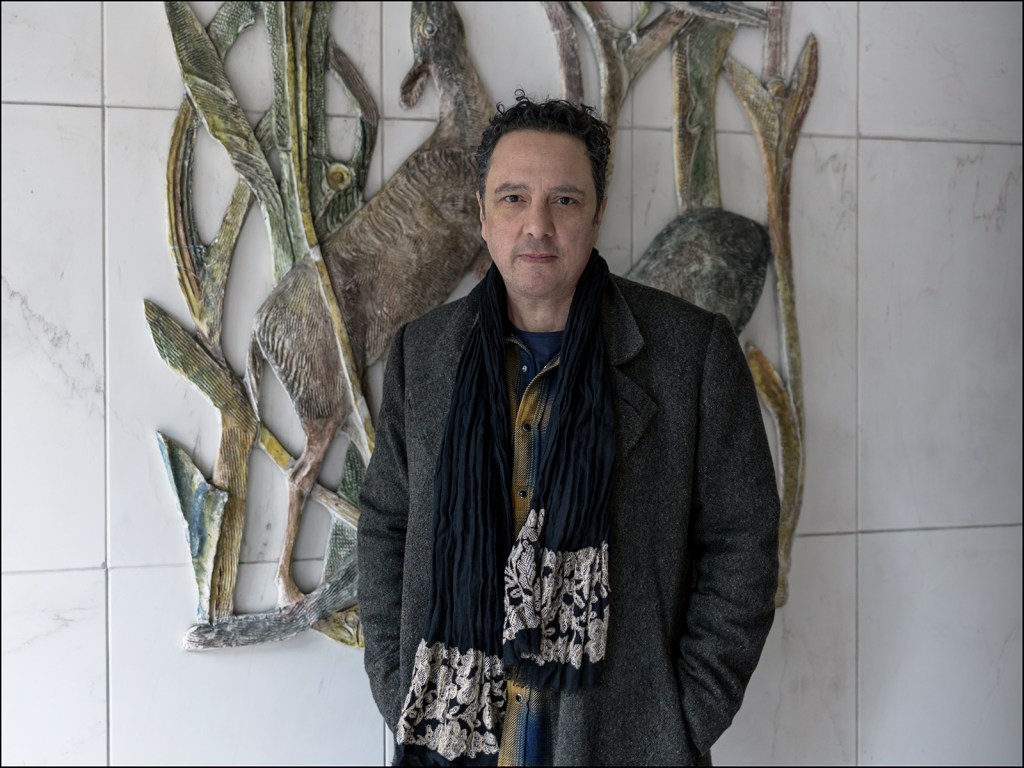
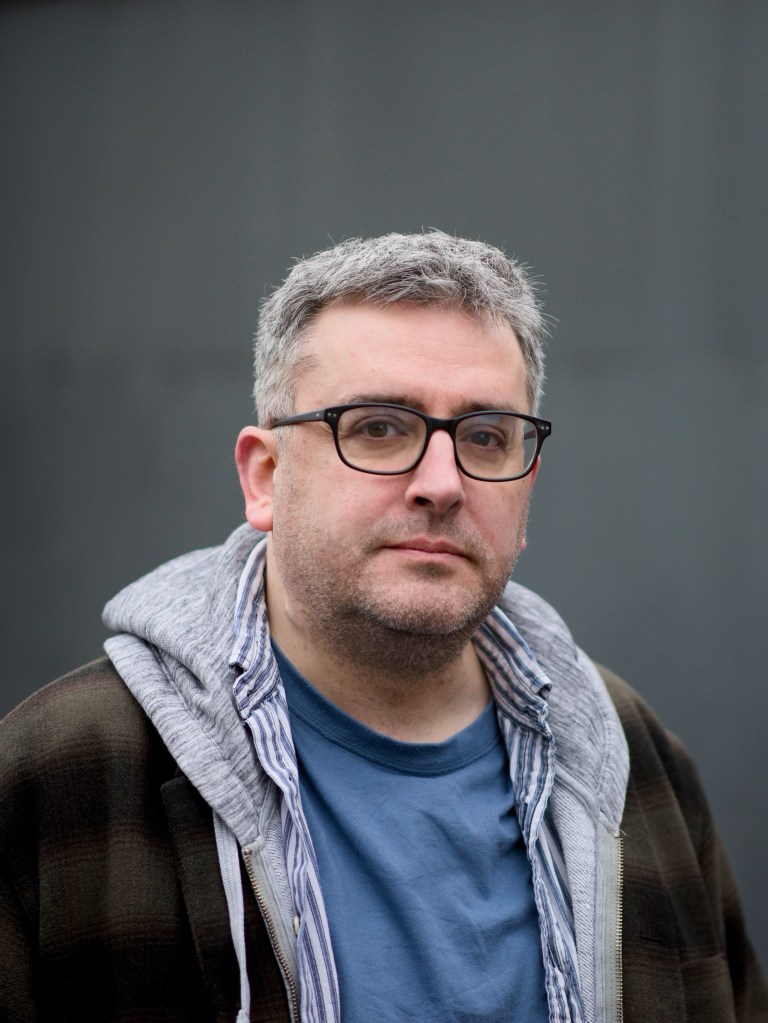
Photo of Ana Schnabl by photographer Matjaž Tančič

Ana Schnabl discusses with Ivan six things which should be better known.

Ana Schnabl is a Slovenian writer and editor. She writes for several Slovenian media outlets and is a monthly columnist for the Guardian. Her collection of short stories Razvezani (Beletrina, 2017) met with critical acclaim and won the Best Debut Award at the Slovenian Book Fair, followed by the Edo Budiša Award in Croatia; the collection has been translated into German and Serbian. Three years later Schnabl published her first novel Masterpiece (Mojstrovina, Beletrina, 2020). She toured Europe with the English, German and Serbian translations of the book, which included a residence in the Museumsquartier in Vienna, the Literarisches Colloquium Berlin, and the first European Writer’s Festival in London. The novel was given favourable reviews and mentions in numerous Austrian, German and English media, and was longlisted for the Dublin Literary Award. Her second novel Flood Tide (Plima, Beletrina, 2022) was nominated for the Slovenian Kresnik Award. Her third novel September (Beletrina, 2024) won the Kresnik Award in 2025.

  1. Dog Behaviour: I’ve got two dogs, and it took me longer than I’d like to admit to figure out what they were actually saying. Like most people, I assumed yawning meant “I’m sleepy” and licking meant “I’m hungry.” In reality, those are often canine code for “I’m stressed, I’m uncomfortable, or I’m about to lose my patience.” If more of us learned to read these signals, we’d save our dogs (and ourselves) a lot of unnecessary drama.
  2. The Concept of Universal Basic Income: I suspect that for a lot of people, Universal Basic Income sounds like a fantasy dreamt up by the lazy and the work-shy—a clever way to dodge the nine-to-five. In reality, it’s nothing of the sort. UBI is simply a way of making sure everyone has enough to be able to afford a stable life, no matter what. It doesn’t stop anyone from earning more; it just ensures nobody is left with less. Think of it less as “free money for doing nothing” and more as “a safety net that lets us all stand on the same ground.”
  3. Mina Mazzini: Known simply as Mina, she was nothing short of a force of nature—Italy’s greatest voice and legend. Her vocal range was outrageous and her stage presence magnetic. I’m keen to spread the gospel of Mina because her music has the kind of emotional depth that can rescue the heartbroken. Especially for anyone who finds Lana Del Rey’s brand of melancholy a little dull lately. Mina simply delivers timeless heartbreak.
  4. Jellyfish: I grew up spending summers on the Slovene coast, where most beach conversations about jellyfish revolved around how nasty they are. I think it’s time to give them a bit of a rebrand. Yes, a sting can hurt—but out of thousands of species, only a few are truly dangerous. The rest are basically drifting marvels: creatures without brains, hearts, or even blood, yet somehow they’ve been around for over 500 million years—outliving the dinosaurs and most likely outliving us, too. Some can glow in the dark, some can clone themselves, and one species is technically immortal. Instead of dismissing them as sea pests, we could admire them as ancient reminders of what survival actually looks like.
  5. Lojze Kovačič’s The Newcomers: I know I sound like a total boomer saying this, but The Newcomers really is a masterpiece—a towering work of autofiction, written decades before “autofiction” was even a buzzword on Goodreads. Based on Kovačič’s own childhood, it tells the story of a family uprooted from Switzerland and resettled in Slovenia during World War II, seen through the bewildered eyes of a boy. It’s a novel about exile, memory, and the strange work of making a new life from scratch. Had Kovačič written it in a major language instead of Slovene, it would likely be hailed as one of the great novels of the 20th century. Luckily, Archipelago Books has given us an English translation, so there’s no excuse not to discover it.
  6. Yugoslavia: I’m not yugonostalgic—I was simply born too late to have any real experience of living there. But I am a defender of some of the genuinely progressive ideas and policies that Yugoslavia introduced and managed to sustain. What gives me the ick is when the country is lazily written off as just a Stalinist sidekick (fake news!) or an unrelentingly oppressive regime. History is rarely that black-and-white, and Yugoslavia is a reminder that it deserves to be studied, not caricatured.

Adam Lind

Adam Lind discusses with Ivan six things which should be better known.

Through living on a narrowboat on the British waterways, Adam Lind has unexpectedly built a large online community of over 900,000 loyal and engaged like-minded souls who enjoy soaking up his passion to live a life of meaning. Adam has appeared on Channel 4’s Narrow Escapes and has been featured in publications including The New York PostBusiness InsiderThe Sun, and others. His new book is Floating Home: Lessons from a life less ordinary.

  1. The importance of human connection
  2. The fear mongering and segregation of the news
  3. You can have control over your thoughts
  4. You don’t need a lot of money to travel
  5. Adversity can be a gift
  6. Comparison is the thief of joy

Andrew Turvil

Food critic Andrew Turvil discusses with Ivan six things which should be better known.

Described by The Independent as one of the UK’s ‘arbiters of taste’, Andrew Turvil is the former editor of The Good Food Guide, AA Restaurant Guide and Which? Pub Guide. As a freelance restaurant critic, writer, and editor, he has spent his career writing about pubs and restaurants, and, undeterred, bought a pub in 2015 and ran it for 10 years. Blood, Sweat & Asparagus Spears is his first book.

  1. Prior to the 1990s, very few chefs were household names. Very few people could reel off a
    list of chefs, but by the end of the decade many were TV stars and known to millions – Gary
    Rhodes, Jamie Oliver et al. The era of the celebrity chef started in the 1990s with food and
    cooking moving into the mainstream of popular culture.
  2. There was less emphasis on the ingredients used in restaurants prior to the 1990s and the consumption of organic food in the UK had barely got going. The 1990s saw the produce start to take centre stage, the breed of animal often referenced on menus, and an ever-increasing variety of ingredients appeared on supermarket shelves.
  3. Fashionable restaurants of the past were revived in the 1990s and gained new leases of life –
    The Ivy, Quaglino’s, J. Sheekey, Quo Vadis – and huge new restaurants were opened by the
    like of Sir Terence Conran. The 1990s saw unprecedented development in the UK restaurant
    sector, particularly, but not exclusively, in London. The 1990s was a decade of empire
    building.
  4. French had been the language of food in the UK for over a hundred years and although still
    deeply imbedded in British food culture, during the 1990s the English language finally started to gain ground in the fine dining sector. Prior to the 1990s ‘posh’ food meant French food, but modern British cuisine took hold through the decade and greater informality in society generally saw a shift away from the grand style of dining developed by Escoffier that had dominated for 100 years.
  5. Asian food in the UK took a great leap forward during the 1990s, with the development of
    modern Indian food, casual Japanese dining, and a new fusion of East meets west cuisine.
    Finally, the varied cuisines of Asia became more visible and the humble curry house and
    Chinese takeaway were no longer the lone representatives of the multiple cuisines of Asia.
  6. The 1990s saw a proliferation of new foodie terms: nose to tail, fusion, Pacific rim and
    molecular gastronomy. These new words and expressions show how the 1990s was a decade
    of change, innovation and experimentation.

Andy Reid speaks negatively about six films

Andy Reid discusses with Ivan six films chosen by previous guests which he thinks should not, after all, be better known. With apologies to Daria Lavelle, Steve Cross, Neil Brand, Tom Newman, Adam Higginbotham and Sam Sedgman.

Andy Reid is the founder of Buddy Up, a mentoring charity for young people across south London and Surrey. He has worked in the youth sector for over 20 years delivering programmes and training throughout the UK.

  1. What Dreams May Come https://www.cinemasight.com/resurfaced-what-dreams-may-come-1998/
  2. Roadhouse https://www.rogerebert.com/reviews/road-house-1989
  3. Rango https://rachelsreviews.net/2015/01/12/rango-movie-review/
  4. Multiplicity https://christiananswers.net/spotlight/movies/pre2000/rvu-mult.html
  5. Sorcerer https://hollywood-elsewhere.com/again-why-sorcerer-failed/
  6. The Peacemaker https://www.washingtonpost.com/wp-srv/style/longterm/movies/review97/peacemakerhowe.htm