Ian Green discusses with Ivan six things which should be better known.
Ian Green is a writer from Northern Scotland with a PhD in epigenetics. His debut fantasy trilogy The Rotstorm began with the Sunday Times bestseller The Gauntlet and the First Beneath. His short fiction has been widely published and he won the BBC Radio 4 Opening Lines competition, the Futurebook Future Fiction Prize, and was shortlisted for Best Newcomer at the British Fantasy Awards. His biopunk eco-terrorism thriller Extremophile was one of Financial Times’ Best Science Fiction Books of 2024 and was shortlisted for the Arthur C. Clarke Award and Dragon Award for Best Science Fiction Novel. His swashbuckling new book The Deep and the Drowned is out now from Head of Zeus.
Matt Hill discusses with Ivan six things which should be better known.
Matt Hill is the Philip K. Dick Award-nominated author of Lamb, The Breach, Zero Bomb, Graft, and The Folded Man. He lives in Glossop, on the edge of the Peak District. His new novel is Wrecks.
You have to rinse the suds off your dishes when you’ve washed them. Sounds trite, even silly, but it’s true, and there’s a deeper point around my wife gently challenging me re mental load of managing childcare and housework
Phil Collins was a phenomenal drummer. Before his 80s ballads, Phil was writing wildly inventive drum parts. Brand X, early Genesis, mad time signatures, technically brilliant.
We are surrounded by free food – some of it weeds! Family walks now involve stopping every ten seconds to pick at leaves or berries. Foraging used to be common and now, obviously, isn’t. Nettles factoid, hawthorn ketchup, pig nuts, pineapple weed tea…
The moors of the Peak District are dotted with WW2 aircraft wreckage you can just walk up to. During and after the Second World War, dozens of planes crashed on the hills of the Peak District. Many of those wrecks are still there, including the Bleaklow Bomber. Amazing, raw history – feels rare for it not to be sanitised or in a museum
It takes a scarily long time to stop when you’re doing 80mph. A recent speed awareness course changed my perception of driving, especially residual speeds. By the time a car going at 70mph has stopped, a car braking from 80mph is still doing 40mph – eek
In England, we only have legal access to a tiny amount of land. Free access to the countryside was fought for, and often won, by mass trespass Yet we still only have access to something like 10% of land and 3% of waterways; the rest is enclosed, bounded away, or requires us to pay.
Joel Christensen discusses with Ivan six things about The Odyssey which should be better known.
Joel P. Christensen is Professor of Classics at the CUNY Graduate Center where he also serves as Provost and Senior Vice President for Academic Affairs. Joel has previously taught at UT San Antonio and Brandeis University. His research interests include early Greek poetry, myth, and literary theory. With Elton Barker, Joel has published Homer: A Beginner’s Guide (2013) and Homer’s Thebes (Harvard University Press 2020). Joel has also authored The Many-Minded Man: The Odyssey, Psychology, and the Therapy of Epic (2020) with Cornell University Press, Storylife: On Epic, Language, and Living Things with Yale in 2025, and Why Odysseus? With Palgrave/Macmillan (2026). He is also editor of the Oxford Critical Guide to the Odyssey (2026) and author of numerous articles on Homer, myth, Greek poetry, and its reception in the modern world.
Ancient Audiences rarely ever read the Odyssey in its entirety
The Odyssey was sung and performed for generations before it was written down
We don’t know how The Odyssey was written down
The Homeric Odyssey isn’t the only version of the story that used to exist
Odysseus was disliked by many early Greek audiences
The ending of the Odyssey is extremely strange and most people ignore it!
Jessica Fellowes discusses with Ivan six things which should be better known.
Jessica Fellowes is an author, journalist and public speaker. The Mitford Murders is her debut series as a novelist and has been nominated for awards in Britain, France, Germany and Italy, and sold into eighteen territories. Jessica is also the author of five official companion books to ‘Downton Abbey,’ various of which hit the New York Times and Sunday Times bestseller lists. Former columnist for the Mail on Sunday and deputy editor of Country Life, she has written business books with Sophie Cornish MBE, ‘The Devil You Know’ with forensic psychologist Kerry Daynes and short stories for Vogue Italia and L’Uomo Vogue. Jessica makes frequent appearances on radio, podcasts and television, has a Substack – Your Fellowes Reader – and lives in Oxfordshire with her family.
Sarah Wilson discusses with Ivan six things which should be better known.
Sarah Wilson is a multi-New York Times bestselling author, journalist, social philosopher, international keynote speaker and philanthropist. Sarah leads dynamic, global conversations about modern philosophy, creativity, existential risk, and climate change via her keynote speaking, Wild podcast, and her Substack and social communities. She lives nomadically, but is based between Paris and Sydney, and is a compulsive hiker and adventurer. Her new book is I Eat the Stars.
Ian Proud discusses with Ivan six things which should be better known.
Ian Proud is an expert in strategic thinking, politico-economic analysis and diplomatic tradecraft. He was a member of His Majesty’s Diplomatic Service from 1999 to 2023. During that time, he was one of the Foreign Office’s most accomplished crisis experts and was Chair of the Crisis Committee at the British Embassy in Moscow when the Salisbury nerve agent attack happened in March 2018. He posts international relations articles and podcasts from his Substack page, The Peacemonger. His first novel, Searching, is now available.
1. Curiosity –One reason we see so much racism and intolerance is a lack of curiosity in society. So, talk to your colleagues or the person sat next to you on the train or the bus and find out something about them that you didn’t know. As much as anything, it will make the journey less of a drag for you and for them. Learn a foreign language – it’s the best way to get into the culture, history and food of a new country and, in my opinion, it vastly improves your enjoyment of the world around you. But it also promotes greater understanding that we are all different, and that most people just want to live a happy life like we do.
2. Boat 813 – for me the most vivid symbol of the destructive power of the 2004 tsunami is the 60-ton Royal Thai Navy patrol boat that was dragged 2 kilometres inland. I saw it for the first time just a few days after that tragic event beside the road as I drove towards Takua Pa, where bodies of the victims were being collected. What is most remarkable, is that it was carried over tall trees before coming to rest, upright, where it stands today in the 813 Tsunami Memorial Park, Bang Niang. It’s a peaceful place of reflection now. And that whole area is rich with beautiful vacation spots again, from the flat golden beaches of Khao Lak to the beautiful limestone islands that dot Phang Nga Bay.
3. Stink beans – the first time you eat stink beans, or sataw as they are known in Thai, the taste is bitter and overpowering. The second time you eat them you might be addicted, like me. Fried simply with shrimp paste, pad sataw is one of my favourite Thai dishes. It’s a reminder to try different street foods, not just in Thailand but also via the thriving pop-up food culture in Britain. And about the value of second chances.
4. A Town Like Alice – Nevil Shute’s 1950 book explores our human ability to endure terrible suffering and yet survive, potentially find true love and live happily ever after. This is a theme I explore in Searching. In A Town Like Alice, the protagonists are both prisoners of the Japanese in World War II. Joe, the Aussie solider ends up crucified for helping Jean Paget (also from Southampton like me, by the way) and the group of women and children she is with on a forced march. She always wondered whether he survived that terrible ordeal… It is also partially set in Malaya where my parents started their married life 1960. One of my earliest, happiest childhood memories is of watching the 1956 movie with my parents.
5. King Charles Street – the façade of the Foreign Office, directly adjacent to Downing Street, is grand and intimidating, which doesn’t help the perception that British diplomats are out of touch elitists. And yet the vast majority are not. Take me, for example, I come from a working-class family and took my degree through part-time day release in Southampton. You can sometimes visit the Foreign Office during London Open House week each September. I’d encourage you to go and admire its fine rooms. And perhaps talk to some of the staff and realise that they are just regular folk. You can enjoy St James Park after, which features in Searching.
6. Sleep – in a crisis, I can work for forty hours without sleep, although I wouldn’t recommend it. A healthy pattern of sleep is the foundation for our physical and mental wellbeing. Our energy to play with the kids or bring maximum focus to our work. And it’s is often stolen or disrupted by work, anxiety or alcoholism. So, embrace bedtime as a chance to recover and rejuvenate. Lean into the power nap, like me, and my routine of falling asleep on the sofa during Bargain Hunt. But be aware that sleepiness can be our foe when we are really stressed. So, own your sleep and don’t let it own you; if you feel sleepy all the time, it might be a reminder to get up and go out for a walk with family or friends, to recharge your emotional batteries…
Sahar Hashemi discusses with Ivan six things which should be better known.
Sahar Hashemi OBE has enjoyed a successful career as an entrepreneur, bestselling author and business thought leader. Initially forging her success as the Co-Founder and former CEO of Coffee Republic, the UK’s first American-style coffee bar chain, Sahar has since built great authority as a business leader and earned an appointment of OBE for her services to the UK economy and charity. Now the Co-Founder of Buy Women Built and hired as a leading keynote speaker, Sahar is commended for her ability to build more creative, customer-centric and resilient workplaces in which a “can do” spirit is paramount.
Eleanor Anstruther discusses with Ivan six things which should be better known.
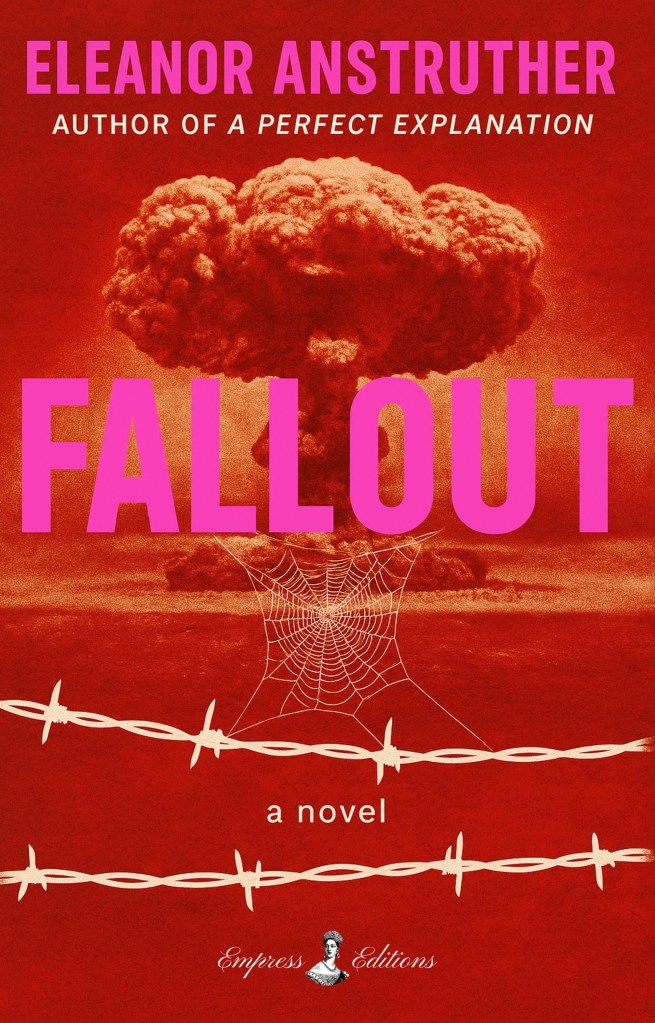
Eleanor Anstruther was educated at Westminster School but dropped out of university to travel the world where she was lost and found for twelve years. When she inherited a farm in southern England she set up a commune and began to write. Her debut, A Perfect Explanation (Salt Books) was a finalist for the Desmond Eliot Prize & Not The Booker. She now lives not quietly at all between London, Surrey and the south of France. Her latest novel, Fallout (Empress Editions) is out now. Find her on Substack at The Literary Obsessive.
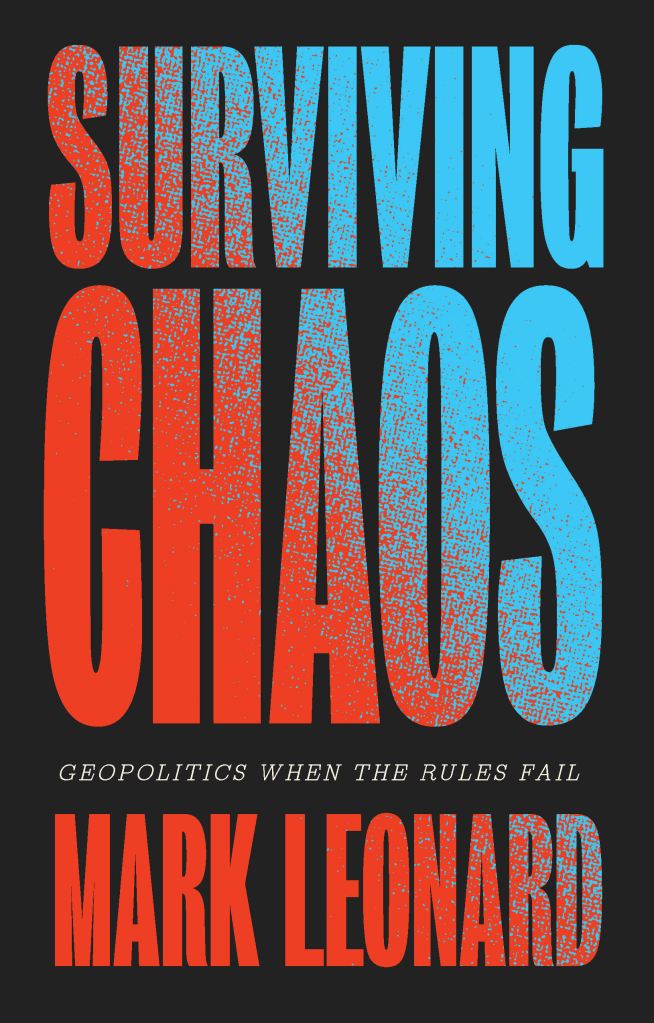
Xi Jinping’s “Great Changes Unseen in a Century”, an understanding that the next few years will be characterized by the need to survive chaos rather than preserving or building order.
Bicycling through big cities – London, New York, Paris, Berlin
Zaho de Sagazan – a brilliant singer-songwriter and performer who is bringing French chanson into the electronic age
George Soros’s philosophy – the billionaire investor and philanthropist is best known for making money but just as important is his understanding of how to live in a world that is out of balance
Drummond Street in North London, the home of the best South Indian restaurants in Europe
Neil Kinnock – the greatest political orator of my life-time who reinvented the Labour Party and is now campaigning for Britain to join the EU.
Tahmima Anam discusses with Ivan six things which should be better known.
Tahmima Anam is the author of the Bengal trilogy and a recipient of the Commonwealth Writers’ Prize for Best First Book and the O. Henry Award. Her short story ‘Garments’ was shortlisted for the BBC National Short Story Award. She is a Granta Best of Young British Novelist and a Fellow of the Royal Society of Literature. Born in Dhaka, Bangladesh, she trained as an anthropologist at Harvard University and now lives in London. Her new novel is Uprising, which is a Political Fiction Book Prize Finalist for the Orwell Prize.