Listen

Sudhir Hazareesingh

Sudhir Hazareesingh discusses with Ivan six things which should be better known.

Professor Sudhir Hazareesingh was born in Mauritius. He is a Fellow of the British Academy a Fellow and Tutor in Politics at Balliol College, His books include The Legend of Napoleon (Granta, 2004), In the Shadow of the General (OUP, 2012) and How the French Think (Allen Lane, 2015). He won the Prix du Mémorial d’Ajaccio and the Prix de la Fondation Napoléon for the first of these, a Prix d’Histoire du Sénat for the second, and the Grand Prix du Livre d’Idées for the third. In 2020, he became a Grand Commander of the Order of the Star and Key of the Indian Ocean (G.C.S.K.), the highest honour of the Republic of Mauritius.

His biography, Black Spartacus: The Epic Life of Toussaint Louverture (Allen Lane, 2020) won the 2021 Wolfson History Prize, with the judges describing it as an ‘erudite and elegant biography of a courageous leader which tells a gripping story with a message that resonates strongly in our own time’. His latest book is Daring to Be Free, described in the New Statesman as “An absorbing and revelatory history of black resistance to the transatlantic trade … a marvel of historical analysis and research.”

  1. The resistance of the enslaved https://www.newstatesman.com/culture/books/book-of-the-day/2025/10/the-liberating-power-of-vodou
  2. The American academic and film-maker Henry Louis Gates jr https://www.theguardian.com/books/2024/mar/10/henry-louis-gates-jr-black-box-writing-race-arrested-beers-with-obama
  3. The Victor Hugo museum in Paris https://www.maisonsvictorhugo.paris.fr/en
  4. Swimming in the river Seine in Paris in August https://www.bbc.co.uk/news/articles/c4gk7nk35l2o
  5. The Sandhamn Murders https://www.forbes.com/sites/paultassi/2025/02/08/netflixs-best-new-crime-show-is-here-and-no-critics-have-seen-it-the-are-murders/
  6. The Mauritian painter Vaco Baissac https://mauritiusarts.com/artist/vaco-baissac/
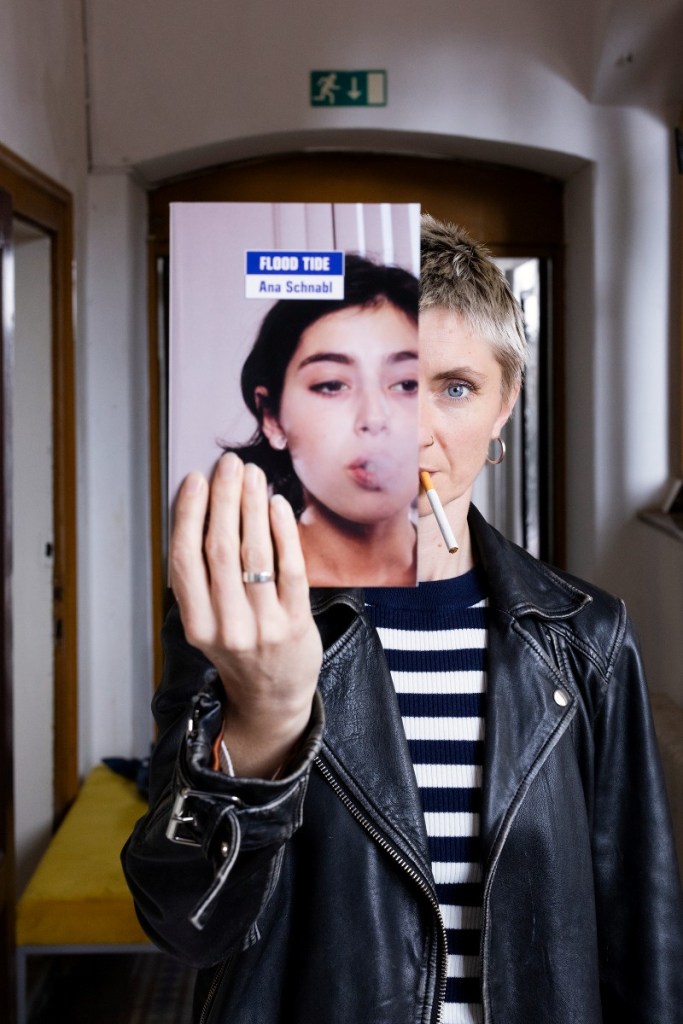
Ana Schnabl

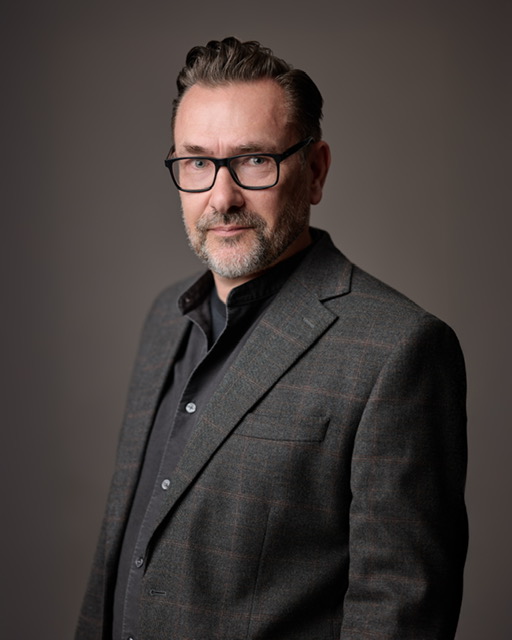
Photo of Ana Schnabl by photographer Matjaž Tančič

Ana Schnabl discusses with Ivan six things which should be better known.

Ana Schnabl is a Slovenian writer and editor. She writes for several Slovenian media outlets and is a monthly columnist for the Guardian. Her collection of short stories Razvezani (Beletrina, 2017) met with critical acclaim and won the Best Debut Award at the Slovenian Book Fair, followed by the Edo Budiša Award in Croatia; the collection has been translated into German and Serbian. Three years later Schnabl published her first novel Masterpiece (Mojstrovina, Beletrina, 2020). She toured Europe with the English, German and Serbian translations of the book, which included a residence in the Museumsquartier in Vienna, the Literarisches Colloquium Berlin, and the first European Writer’s Festival in London. The novel was given favourable reviews and mentions in numerous Austrian, German and English media, and was longlisted for the Dublin Literary Award. Her second novel Flood Tide (Plima, Beletrina, 2022) was nominated for the Slovenian Kresnik Award. Her third novel September (Beletrina, 2024) won the Kresnik Award in 2025.

  1. Dog Behaviour: I’ve got two dogs, and it took me longer than I’d like to admit to figure out what they were actually saying. Like most people, I assumed yawning meant “I’m sleepy” and licking meant “I’m hungry.” In reality, those are often canine code for “I’m stressed, I’m uncomfortable, or I’m about to lose my patience.” If more of us learned to read these signals, we’d save our dogs (and ourselves) a lot of unnecessary drama.
  2. The Concept of Universal Basic Income: I suspect that for a lot of people, Universal Basic Income sounds like a fantasy dreamt up by the lazy and the work-shy—a clever way to dodge the nine-to-five. In reality, it’s nothing of the sort. UBI is simply a way of making sure everyone has enough to be able to afford a stable life, no matter what. It doesn’t stop anyone from earning more; it just ensures nobody is left with less. Think of it less as “free money for doing nothing” and more as “a safety net that lets us all stand on the same ground.”
  3. Mina Mazzini: Known simply as Mina, she was nothing short of a force of nature—Italy’s greatest voice and legend. Her vocal range was outrageous and her stage presence magnetic. I’m keen to spread the gospel of Mina because her music has the kind of emotional depth that can rescue the heartbroken. Especially for anyone who finds Lana Del Rey’s brand of melancholy a little dull lately. Mina simply delivers timeless heartbreak.
  4. Jellyfish: I grew up spending summers on the Slovene coast, where most beach conversations about jellyfish revolved around how nasty they are. I think it’s time to give them a bit of a rebrand. Yes, a sting can hurt—but out of thousands of species, only a few are truly dangerous. The rest are basically drifting marvels: creatures without brains, hearts, or even blood, yet somehow they’ve been around for over 500 million years—outliving the dinosaurs and most likely outliving us, too. Some can glow in the dark, some can clone themselves, and one species is technically immortal. Instead of dismissing them as sea pests, we could admire them as ancient reminders of what survival actually looks like.
  5. Lojze Kovačič’s The Newcomers: I know I sound like a total boomer saying this, but The Newcomers really is a masterpiece—a towering work of autofiction, written decades before “autofiction” was even a buzzword on Goodreads. Based on Kovačič’s own childhood, it tells the story of a family uprooted from Switzerland and resettled in Slovenia during World War II, seen through the bewildered eyes of a boy. It’s a novel about exile, memory, and the strange work of making a new life from scratch. Had Kovačič written it in a major language instead of Slovene, it would likely be hailed as one of the great novels of the 20th century. Luckily, Archipelago Books has given us an English translation, so there’s no excuse not to discover it.
  6. Yugoslavia: I’m not yugonostalgic—I was simply born too late to have any real experience of living there. But I am a defender of some of the genuinely progressive ideas and policies that Yugoslavia introduced and managed to sustain. What gives me the ick is when the country is lazily written off as just a Stalinist sidekick (fake news!) or an unrelentingly oppressive regime. History is rarely that black-and-white, and Yugoslavia is a reminder that it deserves to be studied, not caricatured.

Adam Lind

Adam Lind discusses with Ivan six things which should be better known.

Through living on a narrowboat on the British waterways, Adam Lind has unexpectedly built a large online community of over 900,000 loyal and engaged like-minded souls who enjoy soaking up his passion to live a life of meaning. Adam has appeared on Channel 4’s Narrow Escapes and has been featured in publications including The New York PostBusiness InsiderThe Sun, and others. His new book is Floating Home: Lessons from a life less ordinary.

  1. The importance of human connection
  2. The fear mongering and segregation of the news
  3. You can have control over your thoughts
  4. You don’t need a lot of money to travel
  5. Adversity can be a gift
  6. Comparison is the thief of joy

Andrew Turvil

Food critic Andrew Turvil discusses with Ivan six things which should be better known.

Described by The Independent as one of the UK’s ‘arbiters of taste’, Andrew Turvil is the former editor of The Good Food Guide, AA Restaurant Guide and Which? Pub Guide. As a freelance restaurant critic, writer, and editor, he has spent his career writing about pubs and restaurants, and, undeterred, bought a pub in 2015 and ran it for 10 years. Blood, Sweat & Asparagus Spears is his first book.

  1. Prior to the 1990s, very few chefs were household names. Very few people could reel off a
    list of chefs, but by the end of the decade many were TV stars and known to millions – Gary
    Rhodes, Jamie Oliver et al. The era of the celebrity chef started in the 1990s with food and
    cooking moving into the mainstream of popular culture.
  2. There was less emphasis on the ingredients used in restaurants prior to the 1990s and the consumption of organic food in the UK had barely got going. The 1990s saw the produce start to take centre stage, the breed of animal often referenced on menus, and an ever-increasing variety of ingredients appeared on supermarket shelves.
  3. Fashionable restaurants of the past were revived in the 1990s and gained new leases of life –
    The Ivy, Quaglino’s, J. Sheekey, Quo Vadis – and huge new restaurants were opened by the
    like of Sir Terence Conran. The 1990s saw unprecedented development in the UK restaurant
    sector, particularly, but not exclusively, in London. The 1990s was a decade of empire
    building.
  4. French had been the language of food in the UK for over a hundred years and although still
    deeply imbedded in British food culture, during the 1990s the English language finally started to gain ground in the fine dining sector. Prior to the 1990s ‘posh’ food meant French food, but modern British cuisine took hold through the decade and greater informality in society generally saw a shift away from the grand style of dining developed by Escoffier that had dominated for 100 years.
  5. Asian food in the UK took a great leap forward during the 1990s, with the development of
    modern Indian food, casual Japanese dining, and a new fusion of East meets west cuisine.
    Finally, the varied cuisines of Asia became more visible and the humble curry house and
    Chinese takeaway were no longer the lone representatives of the multiple cuisines of Asia.
  6. The 1990s saw a proliferation of new foodie terms: nose to tail, fusion, Pacific rim and
    molecular gastronomy. These new words and expressions show how the 1990s was a decade
    of change, innovation and experimentation.

Andy Reid speaks negatively about six films

Andy Reid discusses with Ivan six films chosen by previous guests which he thinks should not, after all, be better known. With apologies to Daria Lavelle, Steve Cross, Neil Brand, Tom Newman, Adam Higginbotham and Sam Sedgman.

Andy Reid is the founder of Buddy Up, a mentoring charity for young people across south London and Surrey. He has worked in the youth sector for over 20 years delivering programmes and training throughout the UK.

  1. What Dreams May Come https://www.cinemasight.com/resurfaced-what-dreams-may-come-1998/
  2. Roadhouse https://www.rogerebert.com/reviews/road-house-1989
  3. Rango https://rachelsreviews.net/2015/01/12/rango-movie-review/
  4. Multiplicity https://christiananswers.net/spotlight/movies/pre2000/rvu-mult.html
  5. Sorcerer https://hollywood-elsewhere.com/again-why-sorcerer-failed/
  6. The Peacemaker https://www.washingtonpost.com/wp-srv/style/longterm/movies/review97/peacemakerhowe.htm

Matt Greene

Matt Greene discusses with Ivan six things which should be better known.

Matt Greene is an author, teacher, former screenwriter, and stay-at-home dad. His first novel, Ostrich, won a Betty Trask Award and his memoir Jew(ish) was described by Booker-shortlisted author Nadifa Mohamed as ‘wonderful’ and ‘acerbically funny’. He teaches critical and creative writing in South London, where he lives with his partner and two sons. His new book is The Definitions.

1. Purple Mountains https://www.rollingstone.com/music/music-album-reviews/review-purple-mountains-858339/
2. What killed the studio sitcom https://www.theguardian.com/tv-and-radio/2021/oct/26/the-last-laugh-is-the-television-sitcom-really-dead
3. A Village After Dark https://www.newyorker.com/magazine/2001/05/21/a-village-after-dark
4. Speech Act Theory https://www.thoughtco.com/speech-act-theory-1691986
5. Two Jews, Three Opinions https://www.myjewishlearning.com/article/one-jew-two-opinions/
6. Wierzbicka vs Wittgenstein https://en.wikipedia.org/wiki/Anna_Wierzbicka

Danny Scott

Danny Scott discusses with Ivan six things which should be better known.

Danny Scott grew up in an East Midlands mining village, serving his apprenticeship as an engineer on leaving school, before moving to London in the 1980s. After a job in counter (industrial) espionage, he became a private investigator, then a painter and decorator, then an engineer again, before becoming a journalist and interviewing people like Sir Paul McCartney, Mikhail Gorbachev, Usain Bolt and Dave Hill from Slade. He lives in Essex with his wife and their young son. His memoir, The Undisputed King of Selston (John Murray), was published in June 2025.

1. How to hang a door https://www.youtube.com/watch?v=tizE31oU4Co

2. Children of the Stones was the best kids’ telly show ever made https://thedeadpixels.squarespace.com/articles/2015/8/10/children-of-the-stones-cult-tv-series-review

3. Getting pregnant isn’t as easy as you think https://www.theguardian.com/lifeandstyle/2015/jun/06/young-infertile-four-years-forty-negative-tests-ivf

4. What the miners did for us https://www.bbc.co.uk/future/article/20240703-coal-mining-created-community-and-culture-can-clean-energy-do-the-same

5. Skegness is beautiful https://www.lincolnshirelive.co.uk/news/local-news/skegness-things-to-do-which-4420027

6. These days, there’s no room for the working class. Except at the bottom. https://www.theguardian.com/commentisfree/2022/nov/23/class-barriers-journalism-working-class-liverpudlian-journalist

Alan Green

Alan Green grew up on the north coast of Cornwall and now lives in south London. As an environmental science graduate, he remains passionate about protecting and preserving the natural world. Alan spent nearly three decades at a Magic Circle law firm in the City of London, where he led a copy-editing team. A committed daily runner for over 35 years, Alan combines his love of nature with a commitment to wellbeing in all aspects of life. Sound Advice is his debut book.

1. Our Sun is only 20 galactic years old The bandMidnight Oil once asked, “How can we dance when our earth is turning?” The literal answer takes us from the Earth spinning at jet speed, to the Sun circling the Milky Way, to our galaxy itself hurtling through an expanding cosmos. Remarkably, the Sun has orbited our galaxy just 20 times in its lifetime — a reminder that we are all “star sailors”, in constant motion, even when sitting still.

2. Ivan Wise has blue eyes. I have blue eyes. We may be related… We both have blue eyes — and they may trace back to a single ancestor, 6,000–10,000 years ago. Unlike brown eyes, blue eyes aren’t due to pigment but to the scattering of light, as with a blue sky. Blue eyes are a genetic mutation, but one that persists in humans and pop music.

3. You may not be as old as you feel. Our bodies are in perpetual renewal. Some cells live days, others last a lifetime. On average, our cells are only 7–10 years old — meaning we are all, in a sense, younger than our birthday-cake candles may suggest.

4. Yews, and why you often find them in churchyards. Step into a churchyard and you may find a yew that’s older than the church itself. These trees have stood as markers of sacred ground since before Christianity. They can live for thousands of years. Both healing and poisonous, the yew is both the “Tree of Life and the Tree of the Dead” — a symbol of endurance, regeneration and mortality.

5. Our world without fungi wouldn’t function. From decomposing matter to building vast underground “wood-wide webs”, fungi are indispensable recyclers and collaborators. They’ve given us antibiotics, bread, cheese, beer and even substitute materials for a sustainable future. Fungi are not just important; they’re essential. Without them, ecosystems — and our own lives — would collapse.

6. Morgans don’t have wooden chassis. There’s a persistent myth that Morgan sports cars have wooden chassis. Not true: their chassis are steel or aluminium. What they do have is a hand-crafted ash frame, giving them strength, lightness and character. My own Morgan, now over 25 years old, feels less like a car and more like an old friend.

Laurence Bergreen

Laurence Bergreen discusses with Ivan six things which should be better known.

Laurence Bergreen is an award-winning biographer, historian, and chronicler of exploration. His books have been translated into more than 25 languages. They include Columbus: The Four Voyages, a New York Times bestseller, published by Viking in 2011. In 2007, Knopf published his Marco Polo: From Venice to Xanadu. For this book he crossed China from east to west and camped out on the steppe with hospitable Mongolians in their yurts. His bestselling Over the Edge of the World: Magellan’s Terrifying Circumnavigation of the Globe, was published by William Morrow in 2003.  In its 40th printing, it was awarded the Medalla de Honor by the Asociación de Alcades de V Centenario (Spain). He has also published In Search of a Kingdom about Francis Drake’s voyage of discovery (Simon & Schuster, 2021) and Voyage to Mars: NASA’s Search for Life Beyond Earth published by Riverhead in 2000.

His research for these books included extensive fieldwork.  He has sailed twice through the Strait of Magellan and is one of the few individuals to visit the volcanic island of Surtsey off the coast of Iceland, thanks to the agile helicopters of the Icelandic Coast Guard, among other remote destinations. At NASA’s request, he named numerous geographical features around the crater Victoria on Mars.  He was a keynote speaker for NASA’s fiftieth anniversary event in Washington, DC.  

Laurence graduated from Harvard University in 1972.  He has been a Fellow of the Explorers Club for twenty years, a member of PEN American Center, the Authors Guild, and the Board of Trustees of the New York Society Library.  He lives with his family in New York.

1. Louis Armstrong’s favourite instrument https://oztypewriter.blogspot.com/2020/09/what-wonderful-world-with-typewriters.html

    2. The Well Dressed Man with a Beard by Wallace Stevens https://allpoetry.com/The-Well-Dressed-Man-With-A-Beard

    3. Vladimir Zworykin https://lemelson.mit.edu/resources/vladimir-zworykin

    4. Surtsey https://whc.unesco.org/en/list/1267/

    5. The Strait of Magellan https://www.youtube.com/watch?v=TOOKr8Y2xsM

    6. The Rubin Observatory https://rubinobservatory.org/

    Sam Sedgman

    Sam Sedgman discusses with Ivan six things which should be better known.

    Sam Sedgman is a bestselling children’s author, confirmed nerd and enthusiastic ferroequinologist. Co-creator of the award-winning ‘Adventures on Trains’ and ‘Isaac Turner Investigates’ series, he writes fact-based mystery and adventure stories for the young and young at heart.

    Before writing stories for children, Sam worked as a digital producer at the National Theatre, which meant nosing around backstage with a camera and a microphone, cajoling theatre makers into explaining how stories get made. Forever interested in piecing things together, Sam is a lifelong fan of puzzles, games and detective fiction, and once founded a company making murder mystery treasure hunts for adventurous Londoners. His books have been translated into more than 20 languages.

    When he isn’t writing, Sam can usually be found admiring a handsome timepiece, watching Alfred Hitchcock movies, or explaining some weird fact to you. He lives in London, on top of a railway station.

    1. The decimalisation of time in the French Revolution https://mathshistory.st-andrews.ac.uk/HistTopics/Decimal_time/
    2. Italians having a twelfth cardinal colour, Azzurro https://www.thoughtco.com/azzurro-2011518
    3. The 1997 action movie The Peacemaker https://them0vieblog.com/2012/07/03/non-review-review-the-peacemaker/
    4. Why Australia has so many camels https://eu.desertsun.com/story/life/home-garden/james-cornett/2017/01/27/many-camels-australian-desert/96999820/
    5. The surprising impermanence of burial plots https://bannocksmemorials.co.uk/8-facts-about-graves-memorials-you-didnt-know-before-today/
    6. Montreal’s snow management system https://www.cbc.ca/news/canada/montreal/how-montreal-takes-300-000-truckloads-of-snow-off-the-street-every-winter-1.5023619