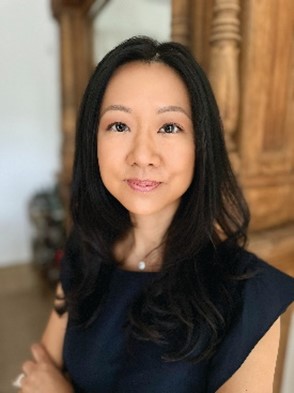
Dani Heywood-Lonsdale

Dani Heywood-Lonsdale discusses with Ivan six things which should be better known.

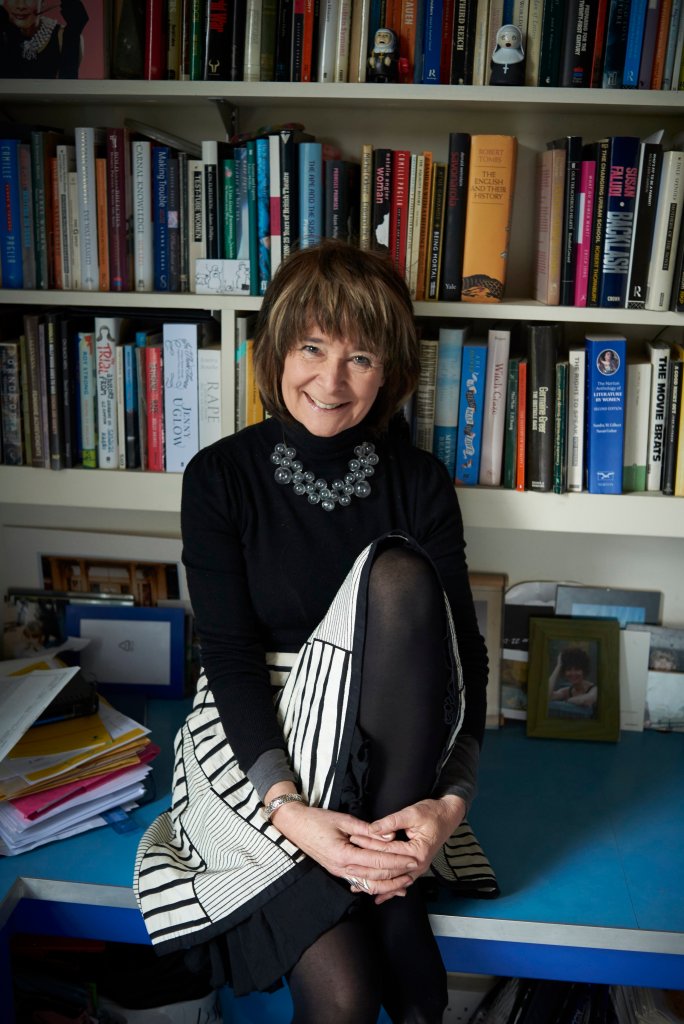
Dani Heywood-Lonsdale is a writer with family roots in Hawaii and the Philippines. She holds a Doctorate in Education and teaches English Literature in Oxfordshire, having previously taught in Florence and London over the past decade. Before pursuing a career in academia, she worked for a nonprofit in New York City and studied social policy and development at LSE. The Portrait Artist is her first novel, and she is an alumna of the Faber Academy. 

1. Adoration of the Magi by Leonardo da Vinci in the Uffizi museum, Florence

An unfinished masterpiece. Da Vinci was commissioned by the monks of San Donato in Scopeto in 1481, but he left for Milan the following year leaving it unfinished. Ghostly, mesmerising and not nearly as famous as some of the Uffizi’s other treasures (i.e. Botticelli’s ‘Birth of Venus’, Caravaggio’s ‘Medusa’ on a wooden shield, Tiziano’s ‘Venus of Urbino’, da Vinci’s ‘Annunciazione’)

2. Ristorante Academia. In Piazza San Marco: quiet, unassuming, unpretentious, DELICIOUS authentic food. The kindest, friendliest staff; every friend I have sent raves about it (and often returns). Wine-and-dine menu is something to behold; my favourite dish is the pappardelle with wild boar

3. The dark, sad and beautiful origins of the original Peter Pan text by JM Barrie James Barrie lived in his brother David’s shadow until he was 6. In 1867, David died in a skating accident, age 14; Barrie forever tried to cheer his devastated mother—who eventually found comfort in the idea that David would remain a boy forever. Barrie had a realisation much later: ‘When I became a man…he was still a boy of thirteen.’

4. Wired to Create by Scott Barry Kaufman ‘Offers a glimpse inside the “messy minds” of highly creative people. Revealing the latest findings in neuroscience and psychology, along with engaging examples of artists and innovators throughout history, the book shines a light on the practices and habits of mind that promote creative thinking.’

5. Molokai hot bread A secret delicacy on the tiny island of Molokai, Hawaii: Down a dingy alleyway at 10pm for freshly baked bread, served by an utterly terrifying man (as my childhood memory serves and to my cousins’ entertainment). A rival between cinnamon-sugar hot bread and strawberry-cream cheese hot bread.

6. Archimede ceramic shop in Ortygia, Sicily In a deceptive location (right by the cathedral and seemingly touristy), this shop has the most exquisite works of art: the traditional moor heads of Sicily with their own twist: 4x baked, pearlized, 24c gold snakes on variations of nontraditional Medusa and Poseidon.

Kathleen deLaski

Kathleen deLaski discusses with Ivan six things which should be better known.

Kathleen deLaski is an education and workforce designer, as well as a futurist. She founded the Education Design Lab in 2013 to help colleges begin the journey to reimagine higher education toward the future of work. Her non-profit has helped 1200 colleges, orgs and economic regions design shorter, more affordable pathways for learners to achieve their economic goals. She spends time as a senior advisor to the Project on Workforce at Harvard University and teaches human-centered design and higher ed reform as an adjunct professor in the Honors College at George Mason University. In a previous career, Kathleen spent twenty years as a TV and then a digital journalist, including time as ABC News White House correspondent. Followed by a political appointment as the first female Pentagon spokesperson. Her new book is Who Needs College Any More?

1. Only 38% of Americans have a 4 year college degree, yet American education and hiring system is really only set up to help this minority succeed.

2. The “College for all” movement of the last several decades is basically dead and that may not be a bad thing

3. White people, generally, are best positioned to skip the college degree.

4. A lot of the focus and debate is on elite colleges, which is odd, because they provide 2% of the college “seats” in America

5. We are in a period of the great skills shakeup in history, which has upended hiring and will continue to do so. 

6. Ai is both “the race track” for fixing or democratizing the hiring system, but also could be the nemesis for entry level workers.

Retrospective part two

Ivan selects five conversations from previous Better Known episodes, including discussions with Henry Hemming, Brooke Allen, Mark William Jones, AJ Jacobs and Meg Rosoff.

1. Eric Maschwitz https://spartacus-educational.com/SPYmaschwitz.htm

    2. The correspondence between Thomas Jefferson and John Adams https://nationalhumanitiescenter.org/pds/livingrev/religion/text3/adamsjeffersoncor.pdf

    3. Rommel in 1942 https://en.wikipedia.org/wiki/Sportpalast_speech

    4. The World Jigsaw Championships https://www.bbc.co.uk/newsround/articles/cj9j24v7ejmo

    5. High Wind in Jamaica https://patricktreardon.com/book-review-a-high-wind-in-jamaica-or-the-innocent-voyage-by-richard-hughes/

    Jeff Sebo

    Jeff Sebo discusses with Ivan six things which should be better known.

    Jeff Sebo is Associate Professor of Environmental Studies, Affiliated Professor of Bioethics, Medical Ethics, Philosophy, and Law, Director of the Center for Environmental and Animal Protection, Director of the Center for Mind, Ethics, and Policy, and Co-Director of the Wild Animal Welfare Program at New York University. His research focuses on animal minds, ethics, and policy; AI minds, ethics, and policy; and global health and climate ethics and policy. He is the author of The Moral Circle and Saving Animals, Saving Ourselves and co-author of Chimpanzee Rights and Food, Animals, and the Environment. He is also a board member at Minding Animals International, an advisory board member at the Insect Welfare Research Society, and a senior affiliate at the Institute for Law & AI. In 2024 Vox included him on its Future Perfect 50 list of “thinkers, innovators, and changemakers who are working to make the future a better place.”

    1. There is a realistic possibility of sentience in all vertebrates and many invertebrates, including insects.

    2. There will be a realistic possibility of sentience in advanced AI systems within the next decade as well. 

    3. We have the ability (and the responsibility) to consider welfare risks for all potentially sentient beings in decisions that affect them.

    4. Industrial animal agriculture is bad for humans, nonhumans, and the environment at the same time. Fortunately, we can replace it.

    5. Rapid AI development creates risks for humans, nonhumans, and the environment at the same time. Fortunately, we can slow it down.

    6. Human-caused global changes affect wild animals too. Fortunately, we can build a safer infrastructure for humans and animals alike.

    Diana McCaulay

    Diana McCaulay discusses with Ivan six things which should be better known.

    Diana McCaulay is a Jamaican environmental activist and the award-winning author of five novels. Winner of the Gold Musgrave Medal, Jamaica’s highest award for lifetime achievement across the arts and sciences; twice Winner of the Commonwealth Short Story Prize for the Caribbean region (in 2022 and in 2012), she has also been shortlisted for the IMPAC Dublin Award, among other nominations, and is the winner of the Watson, Little 50 Prize for unrepresented writers aged 50+. Her new novel is A House For Miss Pauline.

    1. What a healthy coral reef looks like https://simonmustoe.blog/what-does-healthy-coral-reef-look-like/

    2. The Legacies of British Slave ownership project https://www.ucl.ac.uk/lbs/

    3. The Taino artefacts in the British Museum https://www.artoftheancestors.com/blog/taino-arts-british-museum

    4. That the Caribbean is not just a playground for tourists ht tps://www.tiharasmith.com/blogs/behind-the-brand/the-caribbean

    5. Jamaica’s south coast https://www.visitjamaica.com/listing/treasure-beach/474/

    6. How long ago scientists warned of the impacts of putting greenhouse gases in the atmosphere https://www.rigb.org/explore-science/explore/blog/who-discovered-greenhouse-effect

    Better Known: a retrospective

    For this week’s episode, enjoy some of the highlights of Better Known over the years, featuring excerpts from Ivan’s interviews with Jonathan Sayer, Kate Mosse, Jon Glover, Geoff Dyer, Alice Loxton, Anand Menon, Helen Lewis and Ben Schott.

    Jonathan Sayer on Le Coq clowning https://sites.google.com/education.nsw.gov.au/jacqueslecoq/jacques-lecoq/overview-of-his-approach-to-acting

    Kate Mosse on how there are more statues in Edinburgh to animals than to women https://inews.co.uk/news/uk/campaign-seeks-change-fact-edinburgh-statues-animals-women-58867

    Jon Glover on Maggie and Ted https://www.theguardian.com/stage/2021/jun/29/maggie-ted-review-two-tory-prime-ministers-one-long-spat

    Geoff Dyer on Calabash literature festival in Jamaica https://www.vogue.com/article/calabash-literary-festival-in-jamaica-is-the-islands-best-kept-secret

    Alice Loxton on The French House, Soho https://www.timeout.com/london/bars-and-pubs/french-house

    Anand Menon on The Middle https://www.newyorker.com/magazine/2016/03/21/the-middles-realpolitik

    Helen Lewis on the Modesty Blaise novels https://www.theguardian.com/books/2004/sep/19/crimebooks.features

    Ben Schott on Polari https://en.wikipedia.org/wiki/Polari

    Adam Howorth

    Adam Howorth discusses with Ivan six things which should be better known.

    Adam Howorth was born in Stamford, Lincolnshire and grew up in rural Northamptonshire. After moving to London to work in the music industry, he later contributed to The Times and Billboard before joining Apple, where he worked for 18 years. Adam lives near the river in Southwest London, with his wife and two daughters. His new book is Fallen Feathers.

    1. Hemingway’s Boat https://www.theguardian.com/books/2012/jan/08/ernest-hemingway-boat-hendrickson-review

    2. Good manners https://www.headspace.com/articles/the-importance-of-good-manners

    3. Life is about perspective https://medium.com/picturethis/life-is-all-about-perspective-4b8cebb6ced4

    4. How to tie your laces https://www.nike.com/gb/a/how-to-tie-shoelaces

    5. Chip with an 8 iron not a wedge https://golf.com/instruction/nick-faldo-pros-cut-strokes-answers/

    6. Chateau La Faviere 2018 https://www.majestic.co.uk/wines/ch-la-favieres-61200

    Nilanjana Dasgupta

    Nilanjana Dasgupta discusses with Ivan six things which should be better known.

    Nilanjana Dasgupta is provost professor of psychology and inaugural director of the Institute of Diversity Sciences at the University of Massachusetts Amherst. She is the author of many articles; the winner of the Hidden Bias Research Prize from the Kapor Foundation; and the recipient of multiple U.S. government research grants. Her work has been featured in the New York Times and other major outlets. She lives in Northampton, MA. Her new book is Change the Wallpaper.

    1. Diversity training doesn’t change people’s behavior nor the organizations in which they
      work. Do you know we spend 8 billion dollars on diversity training each year? Only a few DEI
      trainings are grounded in science; most are not. Some trainings increase people’s awareness and knowledge about bias and how it works immediately after the training, but benefits fade quickly.
    2. Our behavior is shaped by situational forces more often than our personal beliefs.
      What do I mean by situational forces? They include the opinions of our colleagues, peers, and
      bosses. The roles we occupy and the role-based norms and expectations of how we should act.
      Informal organizational practices and formal policies that constrain our behavior. Stories that signal who and what is valued and respected more and so we try to emulate that and stay away from others who are valued less. The physical design of built environments encourages some people to mix while keeping others apart. All of these situational forces are like the wallpaper in a room—the stuff in the background, barely noticed.
    3. The path to culture change is not individual heroes. In fact, individuals acting alone are
      powerless. But individuals acting together with intention are powerful movers of cultures.
      Culture change is not a one-shot deal; it requires repeated incremental action. Local culture is the sweet spot for people to act together to promote positive culture change, not the larger macro culture. Actions that change material conditions are more important than symbolic acts.
    4. Talent is made, not born. Did you know that young Einstein early in life was pretty average?
      He struggled in school as a child. He didn’t get admission into his college of choice the first time but got in after a second attempt. After graduating, he couldn’t find a permanent job for a while, until a friend’s father helped him get a job at the patent office in Zurich. He struggled to balance work, family, and finish his PhD. Did you know that Einstein’s career was helped by his first wife, also a physicist, whose intellectual collaboration was hidden from public view until later. Mileva Marić was born in Serbia at a time when there were strong restrictions against women pursuing careers in science. They met at the Polytechnic Institute where they shared a passion for physics and fell in love. Letters suggest they collaborated intellectually through their romance and marriage until their separation, but her name doesn’t appear in any of his published work.
    5. Playing for change: A global music project turned movement turned non-profit
      organization for social good that connects the world through music. The idea came from the
      belief that music has the power to break down boundaries and connect people across the world. The project produced over 70 Songs Around the World where musicians of all backgrounds come together transcending language and cultural boundaries, proving how we are all connected.
    6. Travel in Kerala, India. A mixture of cultures, religions, ethnic groups, food, weather,
      landscapes, showing co-existence and contrasts. On the west coast of India, jutting out into the Arabian Sea. Landscapes: Hills, ocean, rivers branching off into tributaries and narrow canals that you can travel by country boats or float down the broader river in overnight houseboats. Protected wildlife, lush green, and city life. Hot and cool weather. Tea and coffee plantations. Spices of all kinds. Coconut trees.

    James Marriott

    James Marriott discusses with Ivan six things which should be better known.

    James Marriott is a columnist at The Times, writing about society, culture and ideas.

    1. The poetry of Geoffrey Hill https://www.lrb.co.uk/the-paper/v07/n06/tom-paulin/the-case-for-geoffrey-hill

    2. CAT S22 Flip https://www.reddit.com/r/dumbphones/comments/16p2an2/cat_s22_flip_reviewjustwow/?rdt=55955

    3. Uzbekistan https://www.wildfrontierstravel.com/en_GB/blog/places-to-visit-in-uzbekistan

    4. The acronym WEIRD (Western, Educated, Industrialized, Rich and Democratic) https://en.wikipedia.org/wiki/The_WEIRDest_People_in_the_World

    5. The War Against Cliche by Martin Amis https://www.theguardian.com/books/2001/apr/14/fiction.martinamis

    6. Rossini’s opera L’Italiana in Algeri https://www.youtube.com/watch?v=KPodHwCbE5k&pp=ygUQI2l0YWxpYW5hZW5hcmdlbA%3D%3D

    Keetie Roelen

    Photo of Keetie Roelen by Brian Tomlinson

    Keetie Roelen discusses with Ivan six things which should be better known.

    Keetie Roelen is a leading thinker in poverty and social policy and a longstanding advocate for social justice. She currently works as a Senior Research Fellow and Co-Deputy Director at the Centre for the Study of Global Development at The Open University, the largest university in the UK. She is also founder and host of the podcast Poverty Unpacked, exploring the hidden sides of poverty in conversation with a broad range of experts.

    Keetie has a PhD in Public Policy and has been working in the field of poverty, social policy, and international development for more than 15 years. Keetie has widely published in academic journals and books, and her work has featured in media such as the Guardian and BBC World Service. She has spoken about how to address poverty to multiple audiences, ranging from government ministers at the UN and MPs in UK parliament to students and activists.

    Keetie is passionate about contributing to a fairer world and creating more prosperous lives for all. Across her career, she has listened to personal accounts of hundreds of families and interviewed dozens of experts, building a deep appreciation of the complexities and opportunities for addressing adversity. Her new book is The Empathy Fix which seeks to tell a new story about why hardship persists and how we can break the cycle.

    1. European films https://www.theguardian.com/film/2019/feb/10/european-film-must-see-25-movies

    2. Transplant Games https://www.bbc.co.uk/news/newsbeat-66336861

    3. Early paintings by Van Gogh https://entertainment.howstuffworks.com/arts/artwork/early-paintings-by-vincent-van-gogh.htm

    4. Assistance dogs https://www.equalityhumanrights.com/guidance/assistance-dogs-guide-businesses-and-service-providers

    5. ATD Fourth World https://www.atd-fourthworld.org/who-we-are/

    6. Dominicanen bookshop in Maastricht https://www.awellreadwanderer.com/boekhandel-dominicanen-unique-bookstore/