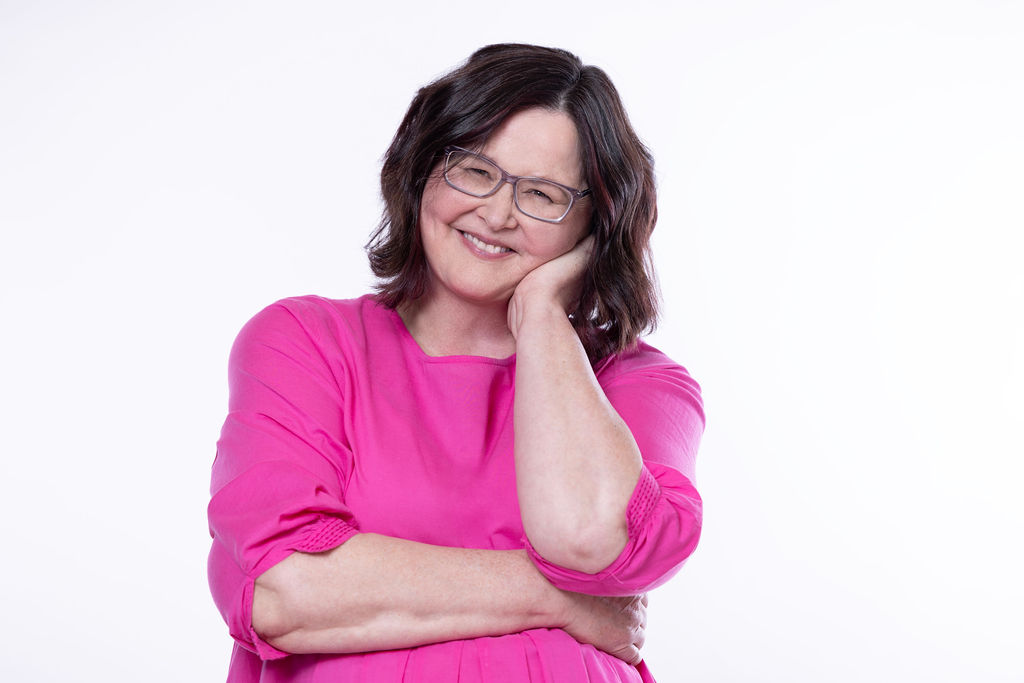
Helen Batten

Helen Batten discusses with Ivan six things which should be better known.

Helen Batten is an author and psychotherapist. Her non-fiction books delve into the historical worlds of circuses, nuns, a family of redheaded sisters and Victorian music hall and opera. After reading history at Cambridge, she trained as a journalist, and worked in television producing and directing documentaries for the BBC. She now works as an integrative psychotherapist and couples counsellor in private practice in London. Helen is currently working on a book about a murder, magic and sacred music in Renaissance Italy.  Her books are Confessions of a Showman, Sisters of the East End, The Scarlet Sisters, and The Improbable Adventures of Miss Emily Soldene.

1. Carlo Gesualdo https://www.newyorker.com/magazine/2011/12/19/prince-of-darkness

2. The Four Horsemen of the Apocalypse in Relationships https://www.gottman.com/blog/the-four-horsemen-recognizing-criticism-contempt-defensiveness-and-stonewalling/

3. Emily Soldene https://www.historyextra.com/period/victorian/emily-soldene-who-was-life-facts-actress-writer-rebel/

4. How to have a good death https://www.amazon.co.uk/Sisters-East-End-Helen-Batten

5. Homing by Jon Day https://www.theguardian.com/books/2019/jun/07/homing-jon-day-review-pigeons

6. The Gladstone Arms https://www.thegladpub.co.uk/

Andrew Pontzen

Andrew Pontzen discusses with Ivan six things which should be better known.

Andrew Pontzen is a cosmologist and a Professor at University College London. He is currently principal investigator on the ERC-funded GMGalaxies project, and co-director of UCL’s Cosmoparticle Initiative. Previously he held a Royal Society University Research fellowship and, before that, junior fellowships in Oxford and Cambridge. His latest book is The Universe in a Box.

1. Simulations and the role they play in science and society https://original.newsbreak.com/@massachusetts-updates-1665615/3107758662878-decoding-the-universe-the-role-of-computer-simulations-in-cosmology

2. Beatrice Hill Tinsley https://www.nytimes.com/2018/07/18/obituaries/overlooked-beatrice-tinsley-astronomer.html

3. Hugh Everett https://www.scientificamerican.com/article/hugh-everett-biography/

4. There are in the order of 200 billion terrestrial planets in our galaxy https://exoplanets.nasa.gov/what-is-an-exoplanet/planet-types/terrestrial/

5. Bayesian probability https://www.analyticsvidhya.com/blog/2016/06/bayesian-statistics-beginners-simple-english/

6. Sierpinski triangle https://fractalfoundation.org/OFC/OFC-2-1.html

Jonathan Sayer

Photo by Colin Thomas

Jonathan Sayer discusses with Ivan six things which should be better known.

Jonathan Sayer is an award-winning comedy playwright and screenwriter; he is the co-author of The Play That Goes Wrong, Peter Pan Goes Wrong, The Comedy About A Bank Robbery, and many more. He is a writer, performer and Creative Director of Mischief Comedy. His work has been performed internationally in forty-six territories including The West End and Broadway. His new book is Nowhere to Run: The ridiculous life of a semi-professional football club chairman.

1. Ashton United and non-league football https://www.theguardian.com/football/2023/aug/10/non-league-football-season-ticket-sales-ashton-united-jonathan-sayer

2. The virtues of growing your own veg https://urbanrootsgardenmarket.ca/the-top-5-benefits-of-growing-your-own-vegetables/

3. JG Farrell https://www.bookforum.com/print/1203/at-his-death-1979-j-g-farrell-was-called-his-generation-s-greatest-historical-novelist-does-the-claim-hold-up-2017

4. Dunning Kruger effect https://thedecisionlab.com/biases/dunning-kruger-effect

5. Twisted Wheel https://www.fredperry.com/subculture/articles/twisted-wheel-pl

6. Al Lubel https://www.chortle.co.uk/comics/a/34098/al_lubel/review

Photo by Colin Thomas

Thomas Curran

Thomas Curran discsses with Ivan six things which should be better known.

Thomas Curran is a professor of psychology at the London School of Economics and author of a landmark study that the BBC hailed as “the first to compare perfectionism across generations.” His TED Talk on perfectionism has received more than three million views. His research has been featured in media ranging from the Harvard Business Review to New Scientist to CNN and he has appeared on numerous television and radio programs. His new book is The Perfection Trap: Embracing the Power of Good Enough.

1. Perfectionism is not high standards https://www.thementalfitnesscompany.com/perfectionism-or-high-standards/

2. It does not make us more successful https://www.linkedin.com/pulse/why-successful-people-rarely-perfectionists-john-mclachlan-2f

3. Perfectionism has many faces https://www.apa.org/monitor/nov03/manyfaces

4. It is rising rapidly among young people https://www.apa.org/news/press/releases/2018/01/perfectionism-young-people

5. Perfectionism is nature and nurture https://thedaily.case.edu/perfectionism-is-a-mix-of-nature-nurture-says-psychologys-amy-przeworski/

6. The antidote to perfectionism is self-acceptance https://www.kindfulbody.com/blog/self-compassion-antidote-perfectionism

Anna Katharina Schaffner

Photo by Albane Brand

Anna Katharina Schaffner discusses with Ivan six things which should be better known.

Anna Katharina Schaffner is a cultural historian and professional burnout coach. Her books include The Art of Self-Improvement: Ten Timeless Truths, Exhaustion: A History and the novel The Truth about JuliaAnna writes regularly for the Times Literary Supplement and Psychology Today.

1. Feelings of exhaustion are nothing new  https://aeon.co/ideas/why-exhaustion-is-not-unique-to-our-overstimulated-age

2. We are not our thoughts https://www.the-exhaustion-coach.com/post/what-s-so-great-about-acceptance-and-commitment-therapy

3. Mind metaphors matter https://psyche.co/ideas/youre-not-a-computer-youre-a-tiny-stone-in-a-beautiful-mosaic

4. We are profoundly shaped by stories about ourselves https://ideas.ted.com/the-two-kinds-of-stories-we-tell-about-ourselves/

5. Dead man’s goals are not enough for creating sustainable behavioural change https://joshuanhook.com/2018/02/04/turn-around-your-dead-mans-goals/

6. Only Lovers Left Alive https://www.theguardian.com/film/2014/feb/20/only-lovers-left-alive-review

Quiz Show

Ivan Wise adopts six quiz show formats and asks himself some searching questions. He uses Family Friends to try and work out if we all think of the same extinct bird, American prison and canyon, He adopts Uiversity Challenge to try and answer the text of Padgett Powell’s The Interrogative Mood – A Novel? in which every sentence is a question. He employs Who Wants to be a Millionaire to consider the exact wording of King Henry II’s request about Thomas Beckett.

  1. Wilhelm Gustloff https://www.smithsonianmag.com/history/deadliest-disaster-sea-happened-75-years-ago-yet-its-barely-known-why-180974077/
  2. Charlton Athletic v Huddersfield, 1957 https://en.wikipedia.org/wiki/Charlton_Athletic_F.C._7%E2%80%936_Huddersfield_Town_A.F.C.
  3. Ignaz Semmelweis https://www.npr.org/sections/health-shots/2015/01/12/375663920/the-doctor-who-championed-hand-washing-and-saved-women-s-lives
  4. Manuscripts destroyed by fire https://www.newyorker.com/magazine/2019/12/09/ralph-ellisons-slow-burning-art
  5. Spanish flu https://www.history.com/topics/world-war-i/1918-flu-pandemic
  6. Charborough Wall http://www.charborough.co.uk/

David Robson

Actor headshot photographer, Kirill Kozlov, London 2021

David Robson discusses with Ivan six things which should be better known.

David Robson is an award-winning science writer based in London. His latest book, The Expectation Effect: How Your Mindset Can Transform Your Life (Canongate/Henry Holt), was a Financial Times Best Book of 2022 and won the British Psychological Society Book Award in 2023. His was previously a features editor at New Scientist and a senior journalist at the BBC, and he writes regularly for the Guardian, the Observer, and the Psychologist.

1. How the nocebo effect makes us sick https://www.bbc.com/future/article/20150210-can-you-think-yourself-to-death

2. Why speaking in the third person makes us smarter https://www.bbc.com/worklife/article/20230411-illeism-the-ancient-trick-to-help-you-think-more-wisely

3. How to escape the illusion of knowledge: https://www.bbc.com/worklife/article/20220812-the-illusion-of-knowledge-that-makes-people-overconfident

4. Reframing fatigue can boost your workouts: https://psyche.co/ideas/physical-fatigue-is-in-the-brain-as-much-as-in-the-body 

5. Family Lexicon by Natalia Ginzburg https://www.newyorker.com/books/page-turner/hiding-in-plain-sight-natalia-ginzburgs-masterpiece

6. Love Soup https://www.theguardian.com/tv-and-radio/2015/feb/12/love-soup-box-set-review

Hana Ayoob

Hana Ayoob discusses with Ivan six things which should be better known.

Hana Ayoob is a science communicator and illustrator using art and events to explore the world around us. She speaks at a range of events from science festivals to comedy nights, produces illustrations for books and other projects, and provides training and consulting for universities and other organisations. 

1. Honey badgers https://www.mentalfloss.com/article/63407/11-fierce-facts-about-honey-badger

2. Leonardo Da Vinci (the man rather than the myth) https://edition.cnn.com/2011/11/08/world/europe/leonardo-da-vinci-life/index.html

3. Singapore https://www.timeout.com/singapore/things-to-do/9-hidden-gems-you-never-knew-existed-in-singapore

4. How to draw anything by Scriberia https://info.scriberia.com/free-chapter-howtodrawanything

5. How useless the human sinuses are https://www.sandiegouniontribune.com/sdut-sinuses-the-mysterious-holes-in-our-heads-2006jul16-story.html

6. Henna https://stepfeed.com/8-things-you-didn-t-know-about-henna-4526

Lewis Dartnell

Lewis Dartnell discusses with Ivan six things which should be better known.

Professor Lewis Dartnell is a research scientist, presenter and author based in London.

He graduated from Oxford University with a First Class degree in Biological Sciences and completed his PhD at University College London in 2007. He now holds the Professorship in Science Communication at the University of Westminster. His research is in the field of astrobiology and the search for microbial life on Mars. He has also held a STFC Science in Society Fellowship and is very active in delivering live events at schools and science festivals, working as a scientific consultant for the media, and have appeared in numerous TV documentaries and radio shows. He has won several awards for his science writing and outreach work and regularly freelances for newspapers and magazine articles. He has also published five books: The Knowledge was the Sunday Times ‘New Thinking’ Book of the Year and international bestseller, and Origins: How the Earth Made Us is a Sunday Times top History book of 2019. Being Human: How our Biology shaped World History is now out.

1. Dave Gingery and his lathe https://en.wikipedia.org/wiki/David_J._Gingery

2. SODIS https://www.sodis.ch/methode/index_EN.html

3. How voting in the US southern states follows a 75-million-year-old seafloor https://www.history.co.uk/article/how-earth-shaped-human-history-interview-with-lewis-dartnell-about-origins

4. Link between a defunct gene in human DNA and the emergence of the Mafia https://www.newscientist.com/podcasts/199-being-human-lewis-dartnell-on-how-our-biology-shapes-our-actions/

5. How tropical diseases helped bring about the union between England and Scotland https://www.nls.uk/exhibitions/scotland-and-darien/

6. Titan and possibility of two biospheres https://science.nasa.gov/science-news/science-at-nasa/2012/28jun_titanocean

Oliver Burkeman

Oliver Burkeman discusses with Ivan six things which should be better known.

Oliver Burkeman is the author of the New York Times and Sunday Times bestseller Four Thousand Weeks, about embracing limitation and finally getting round to what counts, along with The Antidote: Happiness for People Who Can’t Stand Positive Thinking and Help! How to Become Slightly Happier and Get a Bit More Done. For many years he wrote a popular column for the Guardian, This Column Will Change Your Life. In his email newsletter The Imperfectionist, he writes about productivity, mortality, the power of limits and building a meaningful life in an age of distraction. He lives in the North York Moors. 

1. The Zettelkasten https://zenkit.com/en/blog/a-beginners-guide-to-the-zettelkasten-method/

2. Death: The End of Self-Improvement by Joan Tollifson https://www.joantollifson.com/book-death-the-end-of-self-improvement.html

3. The fact that everyone is just winging it https://www.theguardian.com/news/oliver-burkeman-s-blog/2014/may/21/everyone-is-totally-just-winging-it

4. Rosedale Chimney Bank and Spaunton Moor https://www.walkingbritain.co.uk/walk-1921-description

5. “Ought implies can” https://platofootnote.wordpress.com/2016/06/13/ought-implies-can-or-does-it/

6. This Jungian Life https://thisjungianlife.com/