Helen Gordon discusses with Ivan six things which should be better known.
Helen Gordon’s books include Notes from Deep Time (Profile), Landfall (Penguin) and, with Travis Elborough, Being a Writer (Frances Lincoln). She has written about nature, science, art and books for various newspapers and magazines including the Economist’s 1843 magazine, the Guardian, the TLS, Apollo and Wired UK. A former Granta magazine editor, she currently teaches creative writing at the University of Hertfordshire.
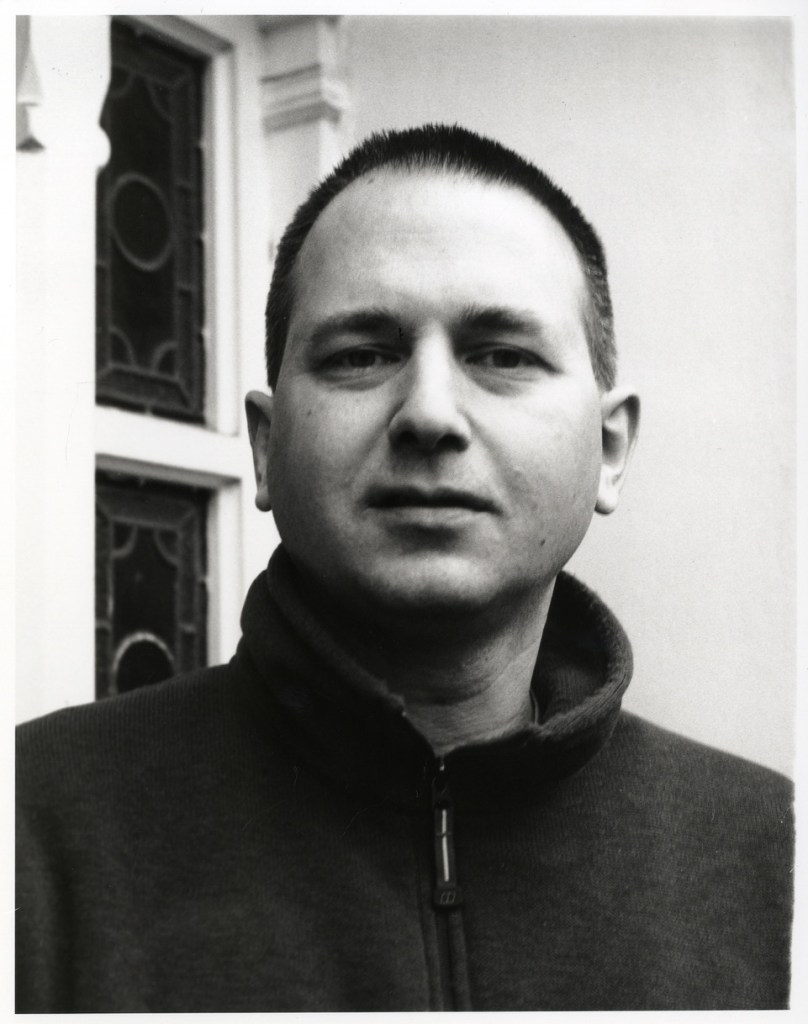
Novelist John King discusses with Ivan six things which should be better known.
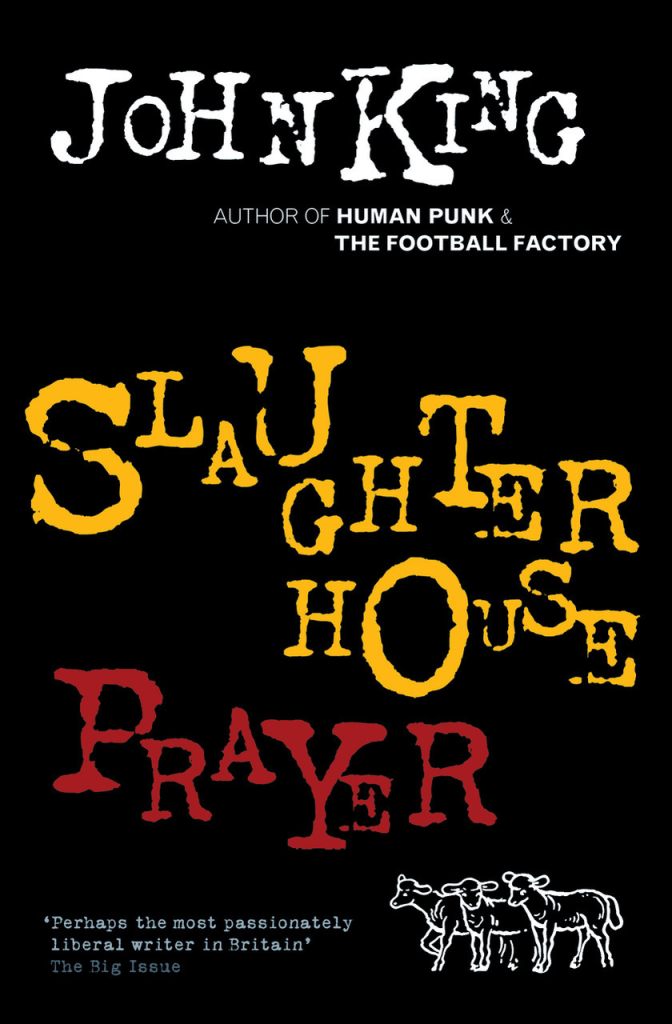
John King is the author of nine novels with a tenth (London Country) to be published in 2023. His debut The Football Factory was turned into a film starring Danny Dyer and Dudley Sutton, while his most recent (Slaughterhouse Prayer) is being developed for television. His first novella The Beasts Of Brussels appeared as one-third of The Seal Club in 2020 along with work by Irvine Welsh and Alan Warner. The second of a proposed trilogy (Seal Club 2: The View From Poacher’s Hill) is due in 2023. John co-owns London Books, edits the London Classics fiction list, publishes and edits the small-press fiction journal Verbal and co-runs the Human Punk nights at London’s 100 Club. He has also written articles and reviews for the likes of the New Statesman in the UK, la Repubblica in Italy and Le Monde in France. You can find out more at https://www.john-king-author.co.uk/
Economist Anton Muscatelli discusses with Ivan six things which should be better known.
Professor Sir Anton Muscatelli has been Principal and Vice-Chancellor of the University of Glasgow since 2009. An economist, his research interests are monetary economics, central bank independence, fiscal policy, international finance and macroeconomics.
Sir Anton was Chair (2016-21) of the First Minister’s Standing Council on Europe, a non-political group providing expert advice to Scottish ministers on Scotland’s relationship with the EU. He was a member of the Scottish Government’s Council of Economic Advisers 2015-21, and subsequently advised them on the National Strategy for Economic Transformation. He is a member of the advisory group for Sir Paul Nurse’s Review of the UK’s Research, Development and Innovation Organisational Landscape. From 2017-20 he was Chair of the Russell Group of UK research-intensive universities. He has been a special adviser to the House of Commons Treasury Select Committee on fiscal and monetary policy, and he has advised the European Commission and the World Bank. He holds an honorary degree from McGill University in Canada.
James McCune Smith was the first African-American in history to hold a medical degree, which he gained at the University of Glasgow in 1837, following a bachelor’s degree in 1835. He was born into slavery and set free in 1827 at the age of 14 in Manhattan.
The University of Glasgow named the first of its new buildings in its recent campus expansion after McCune Smith, in recognition of the importance of diversity in its long history, and the power of education to inspire and create opportunities for all regardless of their background: https://www.gla.ac.uk/explore/future/jmslh/
As the world economy again struggles with an upsurge in inflation, central banks are under fire, especially those in the advanced economies which have been blamed by politicians for not doing enough to combat inflation in the wake of the Covid recovery and the war in Ukraine. In the UK the Bank of England has come particularly under fire:
The danger is that in holding central banks to account for their handling of monetary policy, especially as countries take on more debt to fund the energy crisis on top of the Covid crisis, the gains we have made in creating credible monetary policy institutions since in the 1990s is undermined. The arguments for central bank independence and non-interference by politicians are strong (https://www.reuters.com/business/finance/what-is-central-bank-independence-2022-08-05/ ), but it will be interesting to see if we are entering a new era in which elected politicians will once again want to take control of the reins of monetary policy as well as controlling taxes and spending.
With the globalisation of food, artichokes have become commonplace in our shopping baskets. The most usual form is preserved artichoke hearts (chargrilled, in oil etc) bought from your favourite supermarket. Occasionally in British restaurants and influenced by Roman cuisine you will see deep-fried artichokes (Carciofi alla Giudea) or influenced by French cuisine you will see artichoke hearts served with a classic vinaigrette. However, this provides a very limited introduction to this amazing and versatile vegetable. In Puglia (Apulia) fresh artichokes are grown in abundance during winter and spring, and there is the most amazing array of dishes from baked/stuffed artichokes (Carciofi ripieni) to artichoke flans, pies, and artichokes in risottos and served fried in a light batter together with other fresh vegetables (courgettes and aubergines). Unless you have tasted cooking with fresh artichokes, you will have been exposed in a very limited way to what is one of the best cooking and healthiest vegetables around.
This book is well-known in Italy, and in translation has found its way to some other countries, but is still sadly less well-known than it should be to readers in English. Set in Portugal during the Salazar dictatorship, it tells the story of a journalist whose attitude was one of not causing waves and engaging in self-censorship. He gradually awakens through his friendship with a young man, Monteiro Rossi
The book is an easy read, but highlights a number of complex themes, ranging from the importance of the freedom of the press, to the importance of speech more generally, and to the responsibility which the press and indeed writers in general have to society in telling the truth to readers. The book became popular in Italy when it was published in the 1990s because it was seen as critical of the dominance of the then Italian Prime Minister Silvio Berlusconi in the Italian media. But it is even more relevant now, with the resurgence of populism in Western politics, where the press has a crucial role in ensuring that different points of view are available to the general public.
I have always had an interest in games, including card games. I originally come from a small town near Bari in southern Italy (Mola di Bari). As a child I watched my grandfather and father play a card game called Maniglia using a deck of Neapolitan cards (40 cards split into 4 suits), which was relatively unknown to anyone else, unlike many other trick-taking card games which are widely played throughout Italy (e.g. Tressette, Scopa, Briscola). It was generally played amongst men in working men’s clubs of fishermen and farmers, but the game was not known much more widely than that. It is a trick-taking game with similarities to Bridge except that it doesn’t have the bidding process. Over time I became curious as to how a game which was so hugely popular amongst the menfolk of a single small town was not known outside it and wondered about its history and how it had come to our locality. Later on, I noticed that the game bears a close resemblance to the French game of Manille, played with a 32-card French card deck, having stumbled on this as it was available as an iPhone app!
This year, I finally discovered how it might have spread to my corner of South-East Italy. On a website I found that the game of maniglia known to my grandfather and father was indeed linked to Manille, and the Spanish game of Mariglia. It appears that it spread sporadically through the Bourbon/Spanish lands into southern Italy, and that there seem to be only small areas of Southern Italy and the Islands (parts of Sardinia, areas around Gaeta near Naples, and as it happens my town in Puglia) where this game is played. For me it was an interesting example of how cultural traditions spread through geographies and persist in history, even though it’s now 160 years since the Bourbon Kingdom of Naples ended! Much as how the architecture of Puglia is a melting pot of Norman, Byzantine, Venetian, French and Spanish (including Baroque) influences, so some of our wider traditions (agriculture, food, and in this case leisure activities) are still rooted deeply in history.
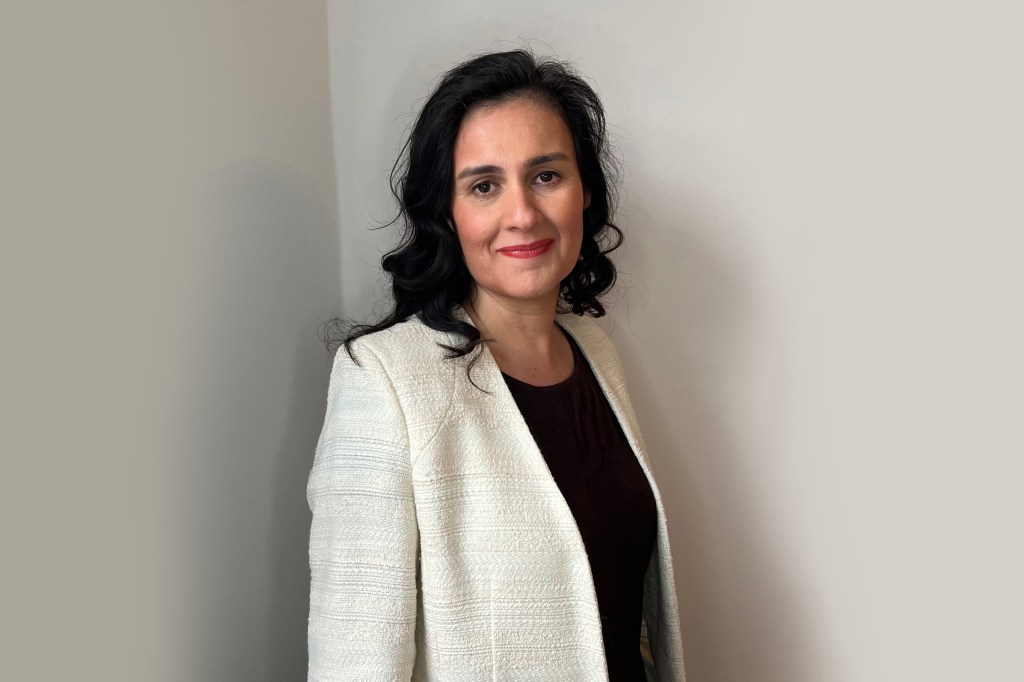
Novelist Kamila Shamsie discusses with Ivan six things which should be better known.
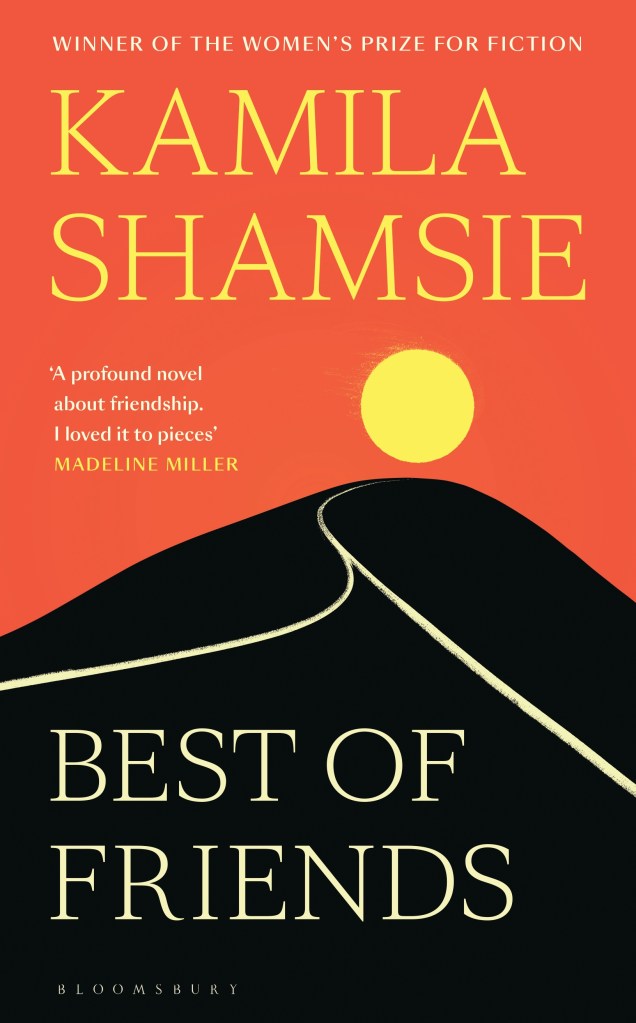
Kamila Shamsie was born and grew up in Karachi, Pakistan. Her novel, Home Fire, won the Women’s Prize for Fiction in 2018. It was also longlisted for the Man Booker Prize 2017, shortlisted for the Costa Best Novel Award, and won the London Hellenic Prize. She is the author of six previous novels including Burnt Shadows, shortlisted for the Orange Prize, and A God in Every Stone, shortlisted for the Women’s Bailey’s Prize and the Walter Scott Prize. Her work has been translated into over 30 languages. Kamila Shamsie is a Fellow of the Royal Society of Literature and was named a Granta Best of Young British Novelist in 2013. She is professor of creative writing at the University of Manchester and lives in London. Her new novel is Best of Friends. Kamila Shamsie is in conversation with Nesrine Malik at London’s Southbank Centre on Wednesday 28th September. Tickets are available.
Philip Ball discusses with Ivan six things which should be better known.
Philip Ball is a freelance writer and broadcaster and worked previously for over 20 years as an editor for Nature. He writes regularly in the scientific and popular media and has authored many books on the interactions of the sciences, the arts, and the wider culture, including H2O: A Biography of Water, Bright Earth: The Invention of Colour, The Music Instinct and Curiosity: How Science Became Interested in Everything. His book Critical Mass won the 2005 Aventis Prize for Science Books. Philip is a presenter of Science Stories, the BBC Radio 4 series on the history of science, and is the 2022 recipient of the Royal Society’s Wilkins-Bernal-Medawar Medal for contributions to the history, philosophy or social functions of science. He trained as a chemist at the University of Oxford, and as a physicist at the University of Bristol. His latest book is The Book of Minds (2022), a survey of the varieties of mind that do and might exist.
Travel writer Tharik Hussain discusses with Ivan six things which should be better known.
Tharik Hussain in an author and travel writer whose work often serves to counter popular and authorised narratives. His debut book, Minarets in the Mountains; A Journey into Muslim Europe, was nominated for the Stanford Dolman Travel Book of the Yearaward and the Baillie Gifford Prize in Non Fiction, and named a Book of the Year in the New Statesman, Prospect Magazine and the Times Literary Supplement. Hussain is also a Lonely Planet author who has written for the BBC, National Geographic and The Guardian. He developed Britain’s first Muslim heritage trails in Woking, Surrey and is a Fellow at the University of Groningen’s Centre for Religion and Heritage.
Rebecca Struthers discusses with Ivan six things which should be better known.
Dr Rebecca Struthers is an independent watchmaker and time historian.
The co-founder of multi-award-winning workshop Struthers Watchmakers, in her practice, she specialises in the continuation of historic watchmaking techniques to restore old and craft new artisan timepieces.
A real time doctor, Rebecca is the first watchmaker in British history to earn a PhD in horology.
Rebecca is a Trustee of the Museum of Timekeeping (UK), a Fellow of British Horological Institute, a Sustainable Skills Ambassador for the Association of Heritage Engineers, a Fellow of the Royal Society of Arts, and an Academy Member of the Grand Prix d’Horlogerie de Genève – considered the Oscars of the watchmaking world.
Her book, Hands of Time, explores the human history of time told through the objects we’ve invented to measure. It will be published in May 2023.
Rebeca Ramos is a Venezuela-born architect and designer. Her international body of work includes of multi-disciplinary projects recognised for their design quality, cultural relevance and technological innovation. She led the design and delivery of the multi-award winning Maggie’s Leeds; as well as the strategic definition of Google’s largest urban Campus based in California. Rebeca founded Studio RARE inn 2021 as the culmination of 16+ years of international practice in architecture, media and the arts. Blending creative disciplines, RARE leverages emerging technologies to re-imagine how we create, develop and experience places, environments and cultural artefacts. The aim is to create meaningful projects with lasting impact, using international thought leadership and innovation to enhance the unique spirit of local contexts and cultures.
She was the first and youngest appointed female Project Leader at Heatherwick Studio, and first Latin-American woman to fill the position in 2015. She has been featured in Bloomberg UK and Business Insider, with projects reviewed and acclaimed in the international design press.
Subhadra Das discusses with Ivan six things which should be better known.
Subhadra Das is a researcher and storyteller who looks at the relationship between science and society. She specialises in the history and philosophy of science, particularly the history of scientific racism and eugenics, and what those histories mean for our lives today. For nine years, she was Curator of the Science Collections at University College London, and also Researcher in Critical Eugenics at the Sarah Parker Remond Centre for the Study of Racism and Racialisation. She has written and presented podcasts, curated museum exhibitions, done stand-up comedy and regularly appears on radio and tv. Her first book, (Un)Civilised: 10 Lies That Made The West comes out in May 2023.
Historian David O Stewart discusses with Ivan six things which should be better known.
A recovering lawyer and proud graduate of Curtis High School on Staten Island, David Stewart has published five books of history and four historical novels. His most recent nonfiction work, George Washington: The Political Rise of America’s Founding Father, has won several awards and was a finalist for Mount Vernon’s George Washington Prize. His most recent novel, The New Land, was inspired by family stories his mother told, and is the first of a trilogy. He lives in Maryland with his wife of 48 years, Nancy; they have three children and five grandchildren. His website is www.davidostewart.com.






 Better Known