Listen

Quiz Show

Ivan Wise adopts six quiz show formats and asks himself some searching questions. He uses Family Friends to try and work out if we all think of the same extinct bird, American prison and canyon, He adopts Uiversity Challenge to try and answer the text of Padgett Powell’s The Interrogative Mood – A Novel? in which every sentence is a question. He employs Who Wants to be a Millionaire to consider the exact wording of King Henry II’s request about Thomas Beckett.

  1. Wilhelm Gustloff https://www.smithsonianmag.com/history/deadliest-disaster-sea-happened-75-years-ago-yet-its-barely-known-why-180974077/
  2. Charlton Athletic v Huddersfield, 1957 https://en.wikipedia.org/wiki/Charlton_Athletic_F.C._7%E2%80%936_Huddersfield_Town_A.F.C.
  3. Ignaz Semmelweis https://www.npr.org/sections/health-shots/2015/01/12/375663920/the-doctor-who-championed-hand-washing-and-saved-women-s-lives
  4. Manuscripts destroyed by fire https://www.newyorker.com/magazine/2019/12/09/ralph-ellisons-slow-burning-art
  5. Spanish flu https://www.history.com/topics/world-war-i/1918-flu-pandemic
  6. Charborough Wall http://www.charborough.co.uk/

David Robson

Actor headshot photographer, Kirill Kozlov, London 2021

David Robson discusses with Ivan six things which should be better known.

David Robson is an award-winning science writer based in London. His latest book, The Expectation Effect: How Your Mindset Can Transform Your Life (Canongate/Henry Holt), was a Financial Times Best Book of 2022 and won the British Psychological Society Book Award in 2023. His was previously a features editor at New Scientist and a senior journalist at the BBC, and he writes regularly for the Guardian, the Observer, and the Psychologist.

1. How the nocebo effect makes us sick https://www.bbc.com/future/article/20150210-can-you-think-yourself-to-death

2. Why speaking in the third person makes us smarter https://www.bbc.com/worklife/article/20230411-illeism-the-ancient-trick-to-help-you-think-more-wisely

3. How to escape the illusion of knowledge: https://www.bbc.com/worklife/article/20220812-the-illusion-of-knowledge-that-makes-people-overconfident

4. Reframing fatigue can boost your workouts: https://psyche.co/ideas/physical-fatigue-is-in-the-brain-as-much-as-in-the-body 

5. Family Lexicon by Natalia Ginzburg https://www.newyorker.com/books/page-turner/hiding-in-plain-sight-natalia-ginzburgs-masterpiece

6. Love Soup https://www.theguardian.com/tv-and-radio/2015/feb/12/love-soup-box-set-review

Hana Ayoob

Hana Ayoob discusses with Ivan six things which should be better known.

Hana Ayoob is a science communicator and illustrator using art and events to explore the world around us. She speaks at a range of events from science festivals to comedy nights, produces illustrations for books and other projects, and provides training and consulting for universities and other organisations. 

1. Honey badgers https://www.mentalfloss.com/article/63407/11-fierce-facts-about-honey-badger

2. Leonardo Da Vinci (the man rather than the myth) https://edition.cnn.com/2011/11/08/world/europe/leonardo-da-vinci-life/index.html

3. Singapore https://www.timeout.com/singapore/things-to-do/9-hidden-gems-you-never-knew-existed-in-singapore

4. How to draw anything by Scriberia https://info.scriberia.com/free-chapter-howtodrawanything

5. How useless the human sinuses are https://www.sandiegouniontribune.com/sdut-sinuses-the-mysterious-holes-in-our-heads-2006jul16-story.html

6. Henna https://stepfeed.com/8-things-you-didn-t-know-about-henna-4526

Lewis Dartnell

Lewis Dartnell discusses with Ivan six things which should be better known.

Professor Lewis Dartnell is a research scientist, presenter and author based in London.

He graduated from Oxford University with a First Class degree in Biological Sciences and completed his PhD at University College London in 2007. He now holds the Professorship in Science Communication at the University of Westminster. His research is in the field of astrobiology and the search for microbial life on Mars. He has also held a STFC Science in Society Fellowship and is very active in delivering live events at schools and science festivals, working as a scientific consultant for the media, and have appeared in numerous TV documentaries and radio shows. He has won several awards for his science writing and outreach work and regularly freelances for newspapers and magazine articles. He has also published five books: The Knowledge was the Sunday Times ‘New Thinking’ Book of the Year and international bestseller, and Origins: How the Earth Made Us is a Sunday Times top History book of 2019. Being Human: How our Biology shaped World History is now out.

1. Dave Gingery and his lathe https://en.wikipedia.org/wiki/David_J._Gingery

2. SODIS https://www.sodis.ch/methode/index_EN.html

3. How voting in the US southern states follows a 75-million-year-old seafloor https://www.history.co.uk/article/how-earth-shaped-human-history-interview-with-lewis-dartnell-about-origins

4. Link between a defunct gene in human DNA and the emergence of the Mafia https://www.newscientist.com/podcasts/199-being-human-lewis-dartnell-on-how-our-biology-shapes-our-actions/

5. How tropical diseases helped bring about the union between England and Scotland https://www.nls.uk/exhibitions/scotland-and-darien/

6. Titan and possibility of two biospheres https://science.nasa.gov/science-news/science-at-nasa/2012/28jun_titanocean

Oliver Burkeman

Oliver Burkeman discusses with Ivan six things which should be better known.

Oliver Burkeman is the author of the New York Times and Sunday Times bestseller Four Thousand Weeks, about embracing limitation and finally getting round to what counts, along with The Antidote: Happiness for People Who Can’t Stand Positive Thinking and Help! How to Become Slightly Happier and Get a Bit More Done. For many years he wrote a popular column for the Guardian, This Column Will Change Your Life. In his email newsletter The Imperfectionist, he writes about productivity, mortality, the power of limits and building a meaningful life in an age of distraction. He lives in the North York Moors. 

1. The Zettelkasten https://zenkit.com/en/blog/a-beginners-guide-to-the-zettelkasten-method/

2. Death: The End of Self-Improvement by Joan Tollifson https://www.joantollifson.com/book-death-the-end-of-self-improvement.html

3. The fact that everyone is just winging it https://www.theguardian.com/news/oliver-burkeman-s-blog/2014/may/21/everyone-is-totally-just-winging-it

4. Rosedale Chimney Bank and Spaunton Moor https://www.walkingbritain.co.uk/walk-1921-description

5. “Ought implies can” https://platofootnote.wordpress.com/2016/06/13/ought-implies-can-or-does-it/

6. This Jungian Life https://thisjungianlife.com/

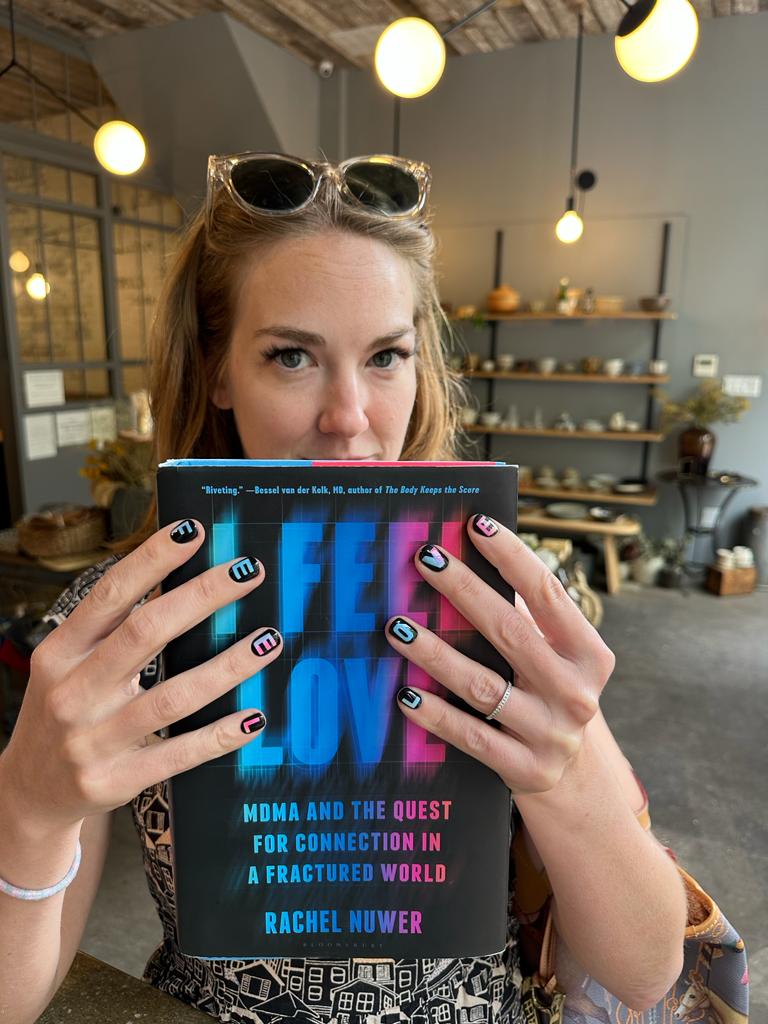
Rachel Nuwer

Rachel Nuwer discusses with Ivan six things which should be better known.

Rachel Nuwer is an award-winning freelance science journalist and author who regularly contributes to the New York Times, Scientific American and National Geographic. Her first book, Poached: Inside the Dark World of Wildlife Trafficking, took her to a dozen countries to investigate the multi-billion dollar illegal wildlife trade. Her new book, I Feel Love: MDMA and the Quest for Connection in a Fractured World, delves into the history, science, politics and culture of MDMA. She lives in Brooklyn. 

1. MDMA has been used by therapists since the 1970s https://www.amazon.com/Feel-Love-Quest-Connection-Fractured/dp/1635579570/

2. Most health problems and deaths attributed to MDMA are the result of prohibition https://www.bbc.co.uk/news/uk-wales-61734334

3. Composting is a really easy way to support the environment https://www.outsideonline.com/culture/essays-culture/compost-new-york-city-zero-waste/

4. Trophy hunting contributes to conservation in Africa https://www.biographic.com/africas-conservation-conundrum/

5. Arresting poachers won’t solve the problem of illegal wildlife trade https://www.amazon.com/Poached-Inside-World-Wildlife-Trafficking/dp/0306825503

6. Rabbits are incredible pets and should be kept indoors http://allaboutrabbitsrescue.org/rabbits-101/

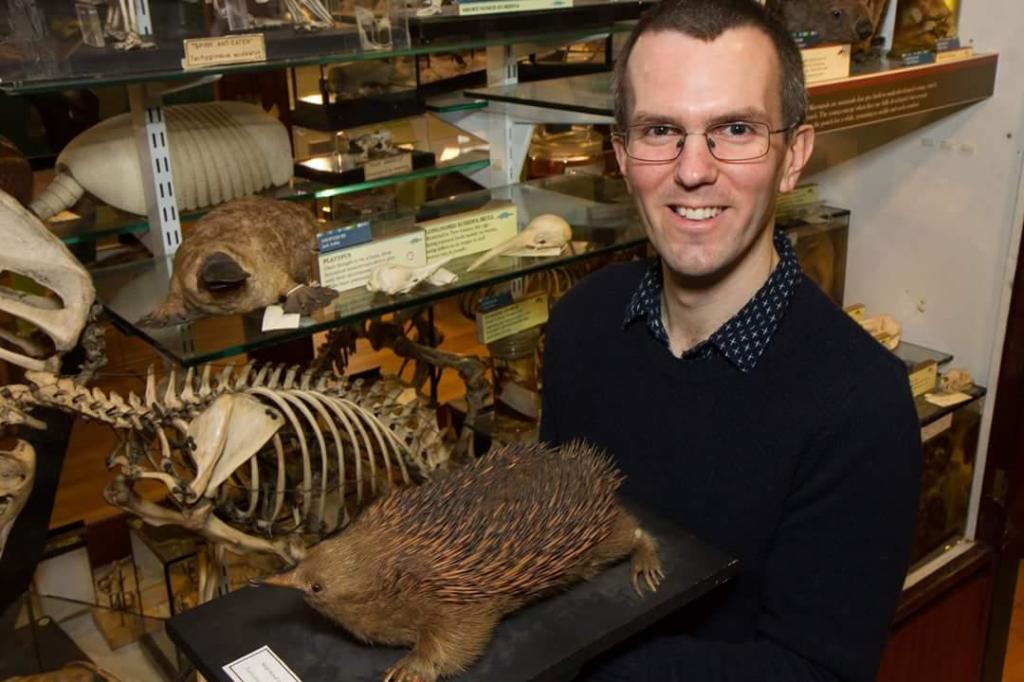
Jack Ashby

Jack Ashby discusses with Ivan six things which should be better known.

Jack Ashby is the Assistant Director of the University Museum of Zoology, Cambridge. His zoological focus is on the mammals of Australia, but his work more broadly centres on engaging people with the natural world, chiefly through museums, and exploring the colonial biases that museums often exhibit. His books, Platypus Matters: The Extraordinary Story of Australian Mammals and Animal Kingdom: A Natural History in 100 Objects combine these scientific and social stories.

From 2022-23 he was an Art Fund Headley Fellow. He is a trustee of the Natural Sciences Collections Association, an Honorary Research Fellow in UCL Science and Technology Studies, and formerly sat on the Council of the Society for the History of Natural History.

1. Platypuses https://www.amazon.co.uk/Platypus-Matters-Extraordinary-Australian-Mammals/dp/0008431477/

2. Ali from Sarawak https://theconversation.com/i-am-ali-wallace-the-malay-assistant-of-alfred-russel-wallace-an-excerpt-85738

3. Biases in natural history museum displays https://www.nhm.ac.uk/discover/news/2019/october/more-male-than-female-specimens-in-natural-history-collections.html

4. Stockholm’s Biologiskamuseet https://www.atlasobscura.com/places/biologiska-museet

5. Tasmanian devils https://www.nationalgeographic.com/animals/mammals/facts/tasmanian-devil

6. Gran Paradiso National Park https://www.cicerone.co.uk/five-ways-to-enjoy-italys-gran-paradiso-national-park

Christian Donlan

Christian Donlan discusses with Ivan six things which should be better known.

Chris Donlan is a writer and journalist. He was born in Los Angeles and now lives in Brighton with his family. His first book, The Unmapped Mind, was shortlisted for the PEN Ackerley prize.

1. Ellen Raskin https://www.eurogamer.net/something-solid-in-a-world-of-liars-the-tattooed-potato-and-the-most-haunted-address-in-new-york-city

2. HP https://www.barnesandnoble.com/w/minds-behind-the-brain-stanley-finger/1101398997

3. William Marlow https://artuk.org/discover/artists/marlow-william-17401813

4. I and My Chimney, a short story by Herman Melville https://www.gutenberg.org/files/2694/2694-h/2694-h.htm

5. LA Dept of Water and Power building https://waterandpower.org/museum/Construction_of_the_GOB.html

6. Hubert Julian https://www.smithsonianmag.com/air-space-magazine/the-black-eagle-of-harlem-95208344/

Kate Harford

Kate Harford discusses with Ivan six things which should be better known.

Rev. Kate Harford serves as University Chaplain at Oxford Brookes University, and the European vocations adviser for the Metropolitan Community Churches as well as a recovering bookseller and keen amateur flautist. She’s currently studying for a master’s degree at the Queen’s Foundation for Ecumenical Theological Education and has a particular interest in queer and disabled theologies with an emphasis on mental health and neurodiversity.  You can hear Kate on The Guilty Feminist podcast on episodes 64, 65 and 110.

1. Metropolitan Community Church https://www.mccchurch.org/

2. Rivers of London series by Ben Aaronovitch https://www.denofgeek.com/books/an-introduction-to-the-rivers-of-london-series/

3. The Story Museum, Oxford https://www.storymuseum.org.uk/

4. ADHD in girls and women https://chadd.org/for-adults/women-and-girls/

5. Valerie Coleman https://www.vcolemanmusic.com/

6. The Anchoress https://iamtheanchoress.bandcamp.com/

Jeremy Musson

Jeremy Musson discusses with Ivan six things which should be better known.

Jeremy Musson is an author of many books on the country house and historic buildings and related subjects, How to Read A Country HouseEnglish RuinsThe Drawing RoomUp and Down Stairs: the history of the country house servant, and a contributor or contributing editor to many more, including with Prof Sir David Cannadine, The Country House: Past, Present and Future.

Born in London in 1965, he grew up in London and Surrey, and after a law degree, at University College, London, and an M Phil in renaissance history, at the Warburg Institute, he worked for the Victorian Society as an architectural adviser, before moving to the National Trust, in East Anglia, as a junior curator. From 1995, he worked for Country Life magazine, as architectural writer and then architectural editor.

Since 2007, he has been an independent author, expert and consultant, advising on the care of numerous historic buildings, including St Paul’s Cathedral, Bevis Marks Synagogue, Red House, Chartwell – Churchill’s country home – and Oxburgh Hall and Hardwick Hall, as well as advising on a number of new architectural projects in sensitive contexts. An occasional television presenter on architectural subjects, he was the presenter and co-writer of the two BBC2 series of The Curious House Guest.

A Fellow of the Society of Antiquaries, he also teaches for the University of Cambridge, the University of Buckingham and New York University (London programmes). He sits on the FAC for Ely Cathedral, is a trustee of the Historic Houses Foundation, and is chair of the Hall Bequest Trust. He is also a former Trustee of the Stowe House Preservation Trust and the Pevsner Book Trust. He is married with two grown up daughters, has lived in Cambridge since 1993, and is an active member of the Champion of the Thames Rowing Club in Cambridge.
1. Stanway https://www.stanwayfountain.co.uk/

2. The Dennis Severs House https://www.theguardian.com/culture/2021/jul/25/dennis-severs-house-recreates-his-eccentric-tours-based-on-found-tapes

3. The churchyard garden, Little St Mary’s Church in Cambridge https://www.parksandgardens.org/places/little-st-marys-churchyard

4. The Compton Mortuary Chapel https://www.wattsgallery.org.uk/visit/explore-our-site/watts-cemetery-chapel

5. Homes Sweet Homes by Osbert Lancaster https://www.houseandgarden.co.uk/gallery/osbert-lancaster 6.

6. Friendships by Mark Girouard https://catholicherald.co.uk/the-writer-who-goes-where-historians-dont-dare/