Ryan Gingeras discusses with Ivan six things which should be better known.
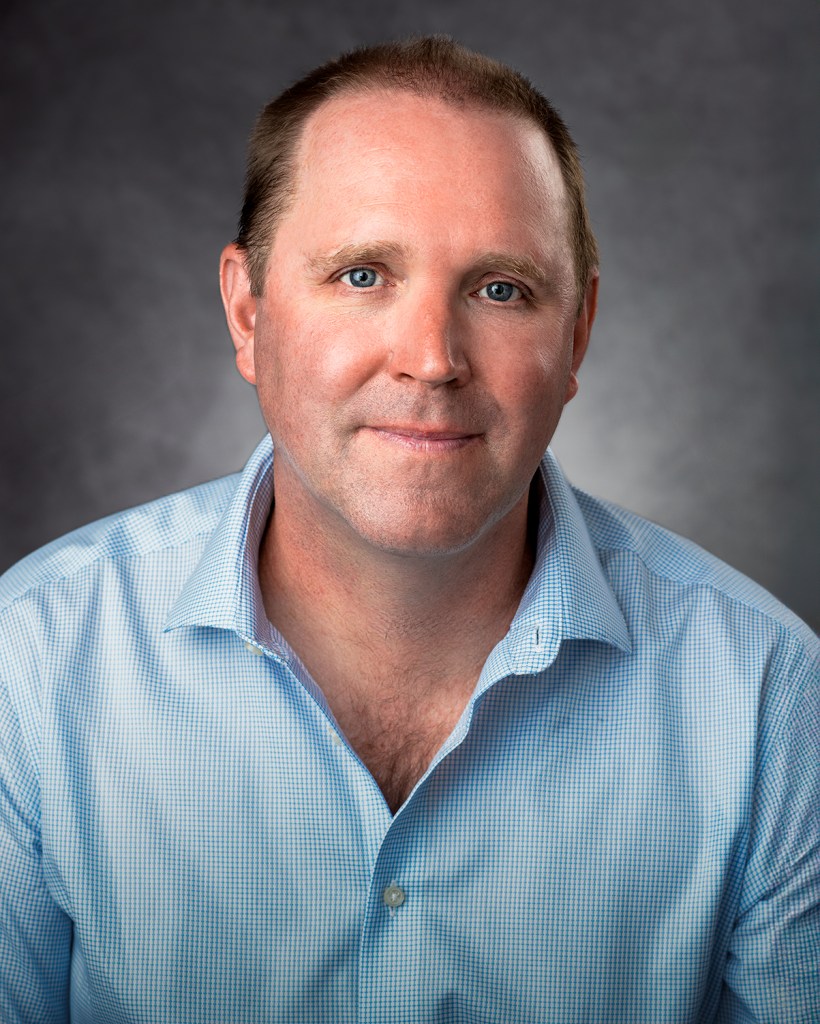
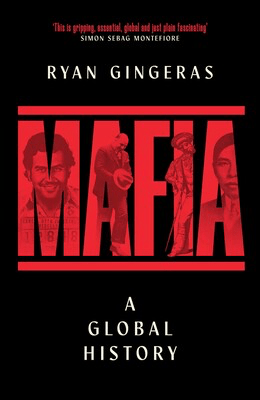
Ryan Gingeras is a professor in the Institute of Regional and International Studies at the Naval Postgraduate School and is an expert in modern Eastern European and Middle East history. He is the author of seven books, including The Last Days of the Ottoman Empire and Sorrowful Shores: Violence, Ethnicity, and the End of the Ottoman Empire 1912–1923, which was shortlisted for numerous book prizes. He has published on a wide variety of topics related to history and politics in publications such as Foreign Affairs, New York Times, Washington Post, Times Literary Supplement and Foreign Policy . He currently lives with his wife and children in the Santa Cruz Mountains. His new book is Mafia: A Global History.
Mafias should be seen as significant historical figures in the making of modern history.
Mafias are not as old as you think.
The laws that “made” mafias a global phenomenon are also not as old as you think.
Al Capone set the mold for the modern gangsters worldwide.
Coppola’s The Godfather marked the critical moment in the making of modern mafias.
Mafias are more integrated into the workings of the modern world than ever before.
Stuart Jeffries discusses with Ivan six things which should be better known.
Stuart Jeffries was born in Wolverhampton in 1962. He was educated in Dudley, Oxford and London.
Stuart started his journalistic career as a cub reporter at the Birmingham Post and Mail in 1985. He used to edit the Walsall Observer’s children’s page under the pseudonym Uncle Tom. Later he was the jazz critic of the Morning Star under the pseudonym Lew Lewis.
In 1987, he moved to the Hampstead and Highgate Express, where he had many duties, chief among which was interviewing Hampstead lady novelists, which he liked a lot.
In 1990, he started work for the Guardian, working as subeditor, TV critic, Friday Review editor, Paris correspondent and feature writer. In 2010 he took voluntary redundancy and since then has been a freelance journalist and author. His work has appeared in the Guardian, the Observer, The Spectator, the Financial Times, the Daily Telegraph, Prospect, the New Statesman. and the London Review of Books, among others. He is the author of Mrs Slocombe’s Pussy (2000), Grand Hotel Abyss (2016), and Everything, All the Time, Everywhere (2021) and A Short History of Stupidity (2025).
Several Nazis tried at Nuremberg were judged geniuses according to IQ tests.
IQ tests are terrible for establishing a person’s stupidity or intelligence.
Until 1975 hysterectomies were performed on black women in certain US states to stop them breeding morons.
Stupidity has its uses – especially in the office.
Pete Brown discusses with Ivan six things which should be better known.
Pete Brown is a British author, journalist, broadcaster and consultant specialising in food and drink. Since February 2025, he has been the Sunday Times Magazine’s weekly beer columnist – the only regular broadsheet newspaper or magazine beer columnist in the UK.
He is currently Chair of Judges for the World Beer Awards. He was named British Beer Writer of the Year in 2009, 2012, 2016 and 2021, has won three Fortnum & Mason Food and Drink Awards, been shortlisted twice for the André Simon Awards, and in 2020 was named an “Industry Legend” at the Imbibe Hospitality Awards. His books include Tasting Notes and Clubland.
Sandy Pentland discusses with Ivan six things which should be better known.
Alex Pentland is a Stanford HAI Fellow and MIT Toshiba Professor. Named one of the “100 People to Watch This Century” by Newsweek and “one of the seven most powerful data scientists in the world” by Forbes, he is a member of the US National Academy of Engineering, an advisor to Abu Dhabi Investment Authority Lab, and an advisor to the UN Secretary General’s office. His work has helped manage privacy and security for the world’s digital networks by establishing authentication standards, protect personal privacy by contributing to the pioneering EU privacy law, and provide healthcare support for hundreds of millions of people worldwide through both for-profit and not-for-profit companies. His new book is Shared Wisdom.
Casual conversation is typically what leads to wisdom and culture
Polarization comes from influencers and other loud voices
AI-aided search can really help weaken echo chambers
Given a conversation platform that is safe space and given participants with shared interests people naturally generate good decisions
Hierarchical organizations are inflexible and poor performing by design
Jaime Dávila discusses with Ivan six things which should be better known.
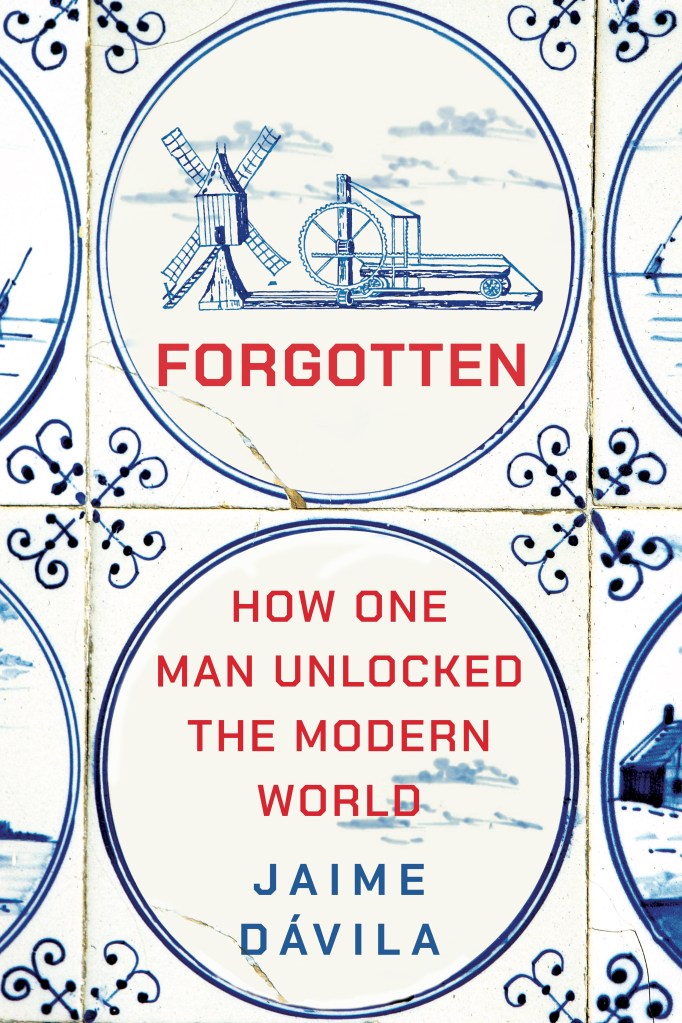
Jaime Dávila earned an engineering degree in the United States. Choosing a career in the creative industries, he worked primarily in broadcasting and eventually led operations at Mexico’s largest media company. He became intrigued by the creation of the first mechanised sawmill by Cornelis Corneliszoon in 1593. This invention, whose significance has been overlooked, inspired his new book Forgotten.
Mankind’s first industrial machine was Dutch.
The Dutch invented participatory capitalism.
The Dutch were early pioneers of liberal governance in a world of monarchies.
The Dutch laid the foundations of industrialization.
New Amsterdam’s influence on American identity is underappreciated.
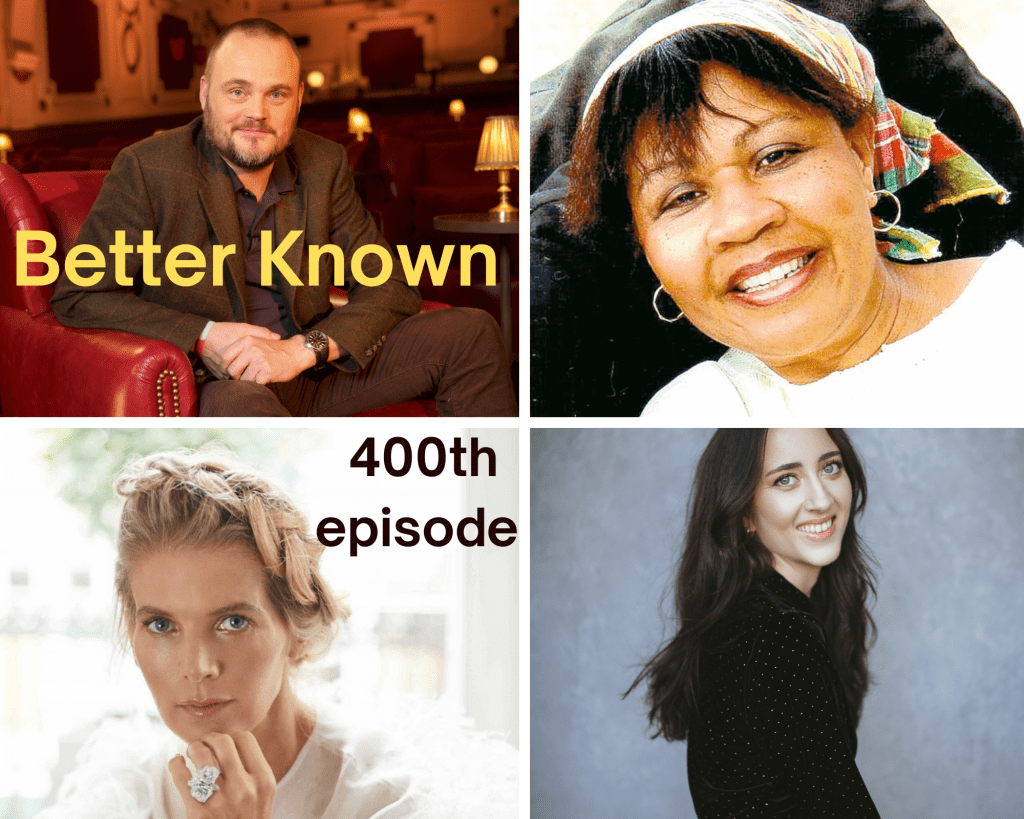
To celebrate the 400th episode of Better Known, previous guest Richard Elwes discusses with Ivan Wise six aspects of the Better Known podcast which Ivan thinks should be better known.
Many thanks to Caroline Crampton and Laurence Bergreen for adding their choices of things which should be better known.
Middle-distance is one of the most exciting forms of running
To mark the 400th episode, listener Peter Cannon chose one thing which he thinks should be better known.
Most people are familiar with opposite ends of the race-distance spectrum: the very short distances of the sprints and the 26.2 miles of the marathon. The sprints will determine who is the fastest on a pure time-trial basis with each runner in his or her own lane. But it’s over in mere seconds. The marathon does not have lanes, obviously, but we’re talking over two hours from start to finish. That is a very long span of time to be engaged in a race that, more often than not, is not close when it really matters. Sometimes sprinters and marathoners come from behind to win. That’s really exciting. And maybe that’s what draws fans to the sport.
There are other race distances between these two extremes. But unless you happen upon one while watching the Olympics, you will be unlikely to encounter it otherwise. It’s middle-distance track. It is simply one of the most exciting forms of racing. And it is here where you will find, almost without fail, what people really enjoy about sports: drama and thrilling finishes.
Middle distance is generally defined to include 800 metres, 1500 metres/1 mile, 3000 metres, and the 3000 metre steeplechase. Although athletics federations classify it as long distance, I view the 5000 metre race as middle distance because it has much more in common with the 1500 than the truly long-distance races.
Unlike all of the sprints (100, 200, 400 metres), there are no lanes separating the middle-distance runners. When the gun goes off, runners all share space on the track. There is physicality – some moderate bumping and shoving – all to obtain and maintain the best position possible. Ideally, it’s near the front of the pack on the inside of lane 1 – so that you run as little extra distance as possible – and always a keen awareness of the runners around you. Some races get strung out while others are relatively slow, which sometimes keeps all of the runners in the race until the very end. The fastest on paper does not always win. Tactics, as much as speed, are key to victory. And there is peril aplenty: get boxed in (meaning surrounded on the inside lane) and you are trapped; you can’t push your way out or you’ll be disqualified. Try to avoid getting boxed in by running in an outer lane and you are already at a disadvantage because you are running extra distance. Responding to moves – one runner surges ahead. Do you go with them or maintain your pace and think they’ll soon run out of fuel? When do you make your move? When do you go? It can’t be too early or too late. Timing is critical.
Some races favour the kickers. These are the runners who can change gears and finish with a relative sprint compared to the other runners. Two very memorable examples of this occurred at this year’s World Championships held in Tokyo. America’s Cole Hocker won gold in the 5000 and New Zealand’s Geordie Beamish won gold in the steeplechase. Both were far from the lead runners and looked to be out of medal contention at the bell (the beginning of the final lap). Yet both unleashed incredible kicks and ran down everyone to win. If you are the fastest on paper this also highlights your dilemma. You have to make sure the pace isn’t too slow, allowing slower runners to remain in the race. You could try to hammer it from the beginning, but very, very few can front run to victory. Even if you are that good, it takes incredible precision. You have to be 100% “on” during that particular race with no margin for error. What is more likely to happen is that you create a slipstream for the other runners to draft in behind you and pass you in the final 100 metres.
What I also think people would enjoy are the compelling stories in this very individualistic sport. These aren’t faceless, nameless people running. We are watching generational talents right now in athletes like Norway’s Jakob Ingebrigtsen and Kenya’s Faith Kipyegon. There are stories of redemption, too. America’s Shelby Houlihan returned from a four-year doping ban to earn silver in the 3000 at this year’s World Indoor Championship. She then went on to place fourth in the 5000 at the 2025 World Championship, which is the highest an American woman has ever placed in that event in a global final.
And in any given meet, there will be several of these races at different distances with different runners. Plenty of variety to go around. All of this action unfurls over a very short but meaningful period of time and makes for spectacular entertainment. So that is why I think middle-distance track should be better known.
Christopher Hill discusses with Ivan six things which should be better known.
Christopher is founder of luxury philanthropic travel brands Hands Up Holidays and Impact Destinations, and serves his majority US-based clients from New Zealand where he lives with his wife, two boys, and dog, Zola.
Eleanor Doughty discusses with Ivan six things which should be better known.
Eleanor Doughty began her career in journalism at the Daily Telegraph, before going freelance to focus on writing. She has written the ‘Great Estates’ column in the Telegraph since 2017, and specialises in writing about the British moneyed and titles classes. Her first book Heirs and Graces, a history of the modern British aristocracy was published in September by Hutchinson Heinemann. Her writing appears in Country Life, The Times and Sunday Times, the Telegraph, the Spectator, the Financial Times, The Field and many other publications. When she is not writing, she can be found either on or near a horse, or out with her cocker spaniel.
Sasha Butler discusses with Ivan six things which should be better known.
Sasha Butler is a Birmingham based writer. Her first novel, The Marriage Contract (Salt, 2025), was shortlisted for the Cheshire Novel Prize 2022 and the Bath Novel Award 2022, under the former title As Soft as Dreams. In addition to novels, she occasionally writes short stories. Her short story ‘Map of an Affair’ features in Floodgate Press’ anthology, Night Time Economy (September 2024).
Doug Lemov discusses with Ivan six things which should be better known.
Doug Lemov is a former teacher and school principal whose books describe the techniques of high-performing teachers. His best-known book, Teach Like a Champion (now in its 3.0 version) has been translated into more than a dozen languages. The Teach Like a Champion Guide to the Science of Reading, out in July and co-written with Colleen Driggs and Erica Woolway, looks at how cognitive science can be better applied to the teaching of reading. Doug holds a BA in English from Hamilton College, an MA in English Literature from Indiana University and an MBA from the Harvard Business School.
Read Doug’s latest on his blog or follow him on X (@Doug_Lemov).
The difference between ingredients and cake. This is a reference to what the British education researcher Daisy Christodoulou says about understanding the difference between knowledge (or facts) and critical thinking. Asking which one you should have more of is like asking whether you want more ingredients or cake… the ingredients make the cake. To think critically you need knowledge. “The big mistake we have made in the United States, is to assume that if we want students to be able to think, then our curriculum should give our students lots of practice in thinking,” writes another important researcher, Dylan Wiliam. “This is a mistake because what our students need is more to think with.” In other words, people dismiss the importance of factual knowledge. When we try to teach critical thinking without it, it’s a dead end street.
How cognitive scientists define learning. As “a change in long term memory.” And further: If nothing has changed in long-term memory, nothing has been learned.” This is profoundly important because we forget (ie fail to learn) almost everything we come to understand in our lives unless we take specific actions to prevent this.
Lord of the Flies. Well I LOVE Lord of the Flies… but really it’s here as a proxy to speak to the importance of reading great books. And hard books. Which basically young people don’t do any more in school.
How powerful it is to read aloud with young people…and how to do it well
The benefits of very short writing exercises “American teachers assign a lot of writing but they don’t teach it well” write Judith Hochman and Natalie Wexler. This is one reason why.







 Better Known