


Matt Kohut discusses with Ivan six things which should be better known.
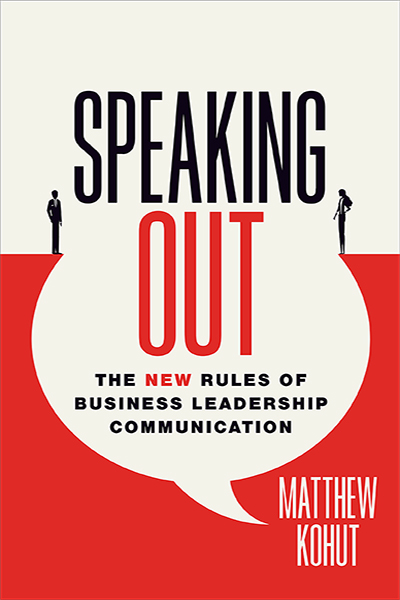
Matthew Kohut is the author of Speaking Out: The New Rules of Business Leadership Communication (2024). He is the coauthor of The Smart Mission: NASA’s Lessons for Managing Knowledge, People, and Projects (2022), and Compelling People: The Hidden Qualities That Make Us Influential (2013), one of Amazon’s Best Business Books of 2013. As the managing partner of KNP Communications, Matt has prepared CEOs, elected officials, and public figures for events from live television appearances to TED talks. Matt has taught at George Washington University and held a fellowship at Bennington College. His writing has appeared in publications from Harvard Business Review to Newsweek.
1. The best way to get someone to agree with you is to start by agreeing with them. Reciprocity makes the world go round. When trying to persuade someone, ask yourself first about the other person’s concerns, interests, or emotions: is there something you can authentically validate? Start there rather than with your point of view.
2. Machiavelli’s dilemma–is it better to be loved than feared or feared than loved?––is a false choice. Few people remember this sentence that followed the question: “One should wish to be both, but…it is difficult to unite them in one person.” It’s not either/or. Strength and warmth are complements, not opposites. People want to know that you are strong and warm—that you are both capable and caring.
3. Knowledge is profoundly social. What you know is deeply influenced by your context and culture. It comes from a combination of experiences and reflective learning, and it’s often difficult to articulate. We learn by doing and talking to others about it. Ask a figure skater how to land a triple axel or a heart surgeon how to replace a bad valve; neither will be able to share what they know unless you’re a peer with a shared sense of context.
4. If you want people to remember what you say, tell a story. As prophets and philosophers have known for millennia, stories stick with us. Psychologist Jerome Bruner found that a story is 22 times more memorable than the same information delivered as flat content. Stories also provide a context in which people can find a shared sense of meaning and purpose.
5. Purpose leads to motivation; struggle leads to meaning. A shared purpose gives a group something to strive toward. A shared sense of meaning only comes when experience is followed by reflection and discussion. The shared meaning that a group assigns to an experience is a measure of its significance.
6. Listening to understand another person’s perspective takes different skills than listening to analyse a problem and make a decision. None of us really know what it’s like to walk in another person’s shoes. This kind of listening calls for embracing the realization that you don’t know what you don’t know. Tone is critical. Think twice before you say, “I understand,” because you might not understand.
 Better Known